The State of Bitcoin Mining in Brazil (2026)
A few first movers, a complicated tax code, and a grid too big and messy to navigate easily.


This article is part of Hashrate Index's State of Bitcoin Mining in Latin America series.
Brazil’s Bitcoin mining story used to be a footnote. A few early operators, a complicated tax code, and a grid too big and too messy to navigate easily. That changed fast.
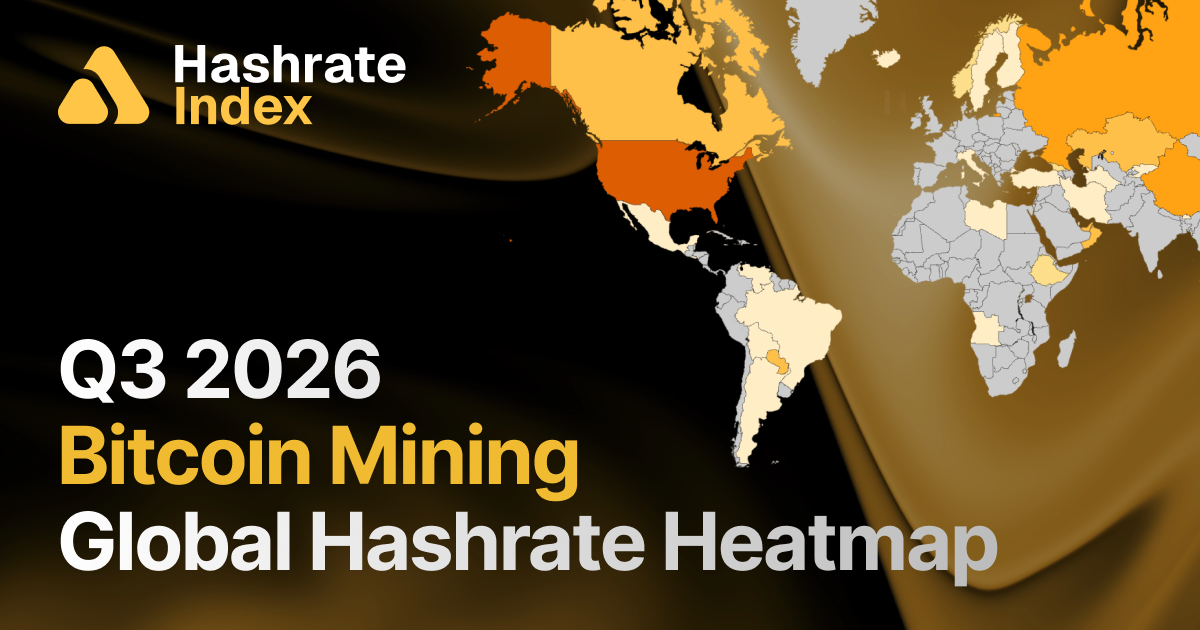
From Q3 2025 to Q3 2026, Brazil’s estimated hashrate contribution grew from roughly 2.5 EH/s to 3.5 EH/s — +40% year-over-year, and part of a longer climb from just ~1.5 EH/s in early 2025. The raw growth rate has cooled from the explosive run of 2024 and early 2025, but the more revealing number is relative. Over the most recent quarter, global network hashrate contracted from ~1,004 EH/s to ~940 EH/s (-6.4%) as operators in the US, Russia, China, and Kazakhstan idled machines — and Brazil held flat at 3.5 EH/s, lifting its share of global hashrate to ~0.37%. When much of the world was powering down, Brazil didn’t. That is conviction.
Here’s what mining in Brazil looks like on the ground, and why the next 12 months could determine whether it becomes one of the top five Bitcoin mining jurisdictions in the world.
The Grid: More Powerful Than Most People Know
Brazil’s Sistema Interconectado Nacional (SIN) generated 708.1 TWh in 2023, with installed capacity reaching approximately 232 GW in 2024 and growing toward 268 GW by 2029. The generation mix is extraordinary by any global standard: Itaipu’s 14,000 MW (shared with Paraguay under treaty), Belo Monte’s 11,233 MW in Para connected to Sao Paulo via a 2,518 km HVDC link, Tucurui’s 8,370 MW, and 19.6 GW of wind capacity spread across 693 plants in the Northeast. On most days, Brazil runs at 88 to 90 percent renewable composition.
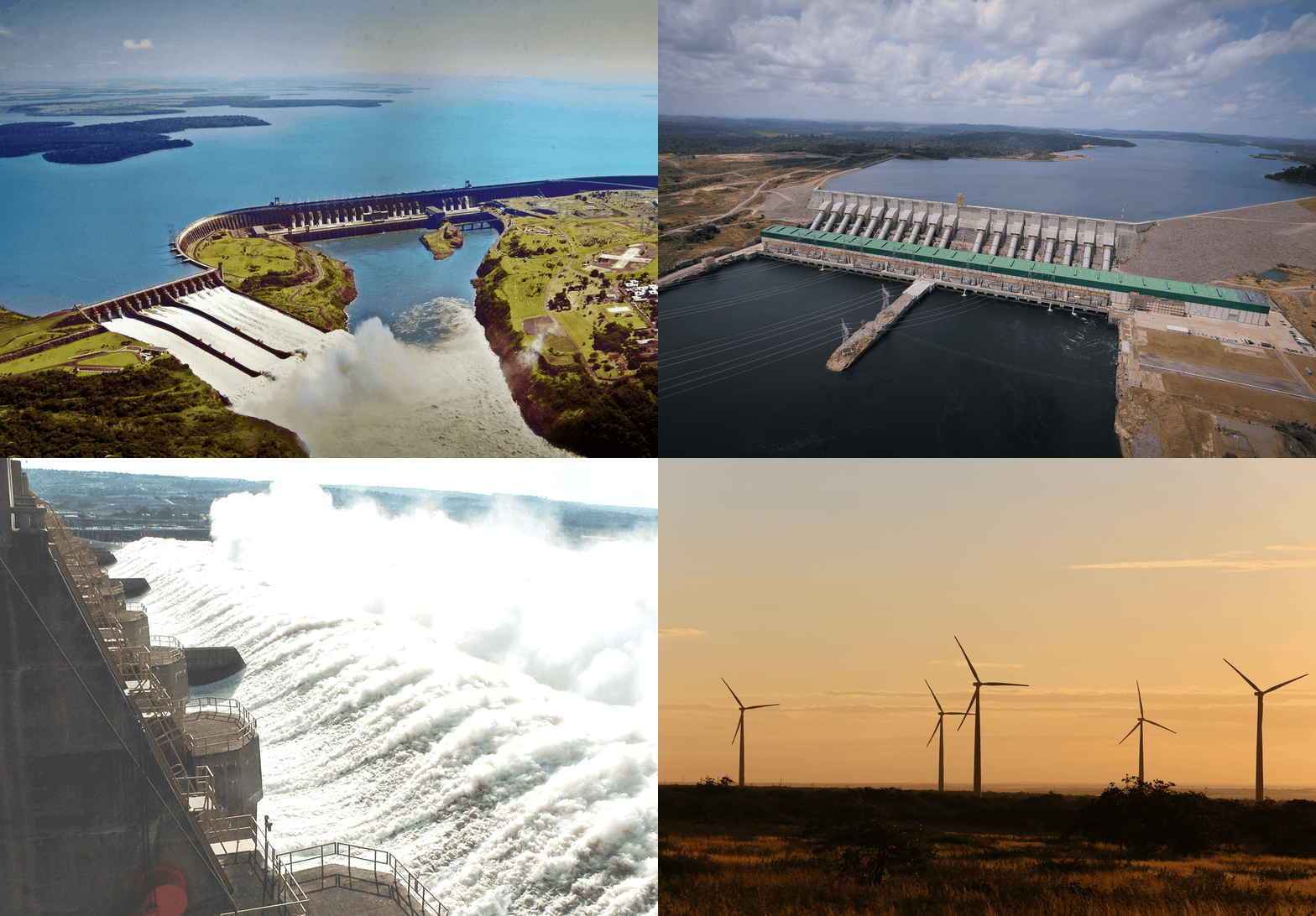
The practical result for miners: Brazil has some of the cleanest grid power on earth.
The regulated tariff figures, what a captive industrial consumer pays on the default distribution network, include all distribution charges, sectorial costs, and ICMS. On that basis, the Sul region (Rio Grande do Sul, Santa Catarina, Parana) carries the lowest captive industrial tariff at approximately R$652/MWh, the national industrial average sits around R$694/MWh, and Centro-Oeste runs higher at R$824/MWh. At today's USD/BRL rate of approximately 5.17, those translate to roughly $0.126/kWh, $0.134/kWh, and $0.159/kWh respectively. Not competitive for mining on their own, and not the relevant benchmark. These are the rates a captive consumer pays after the full stack of distribution charges, transmission fees, sectorial costs, and ICMS have been added. They are included here for reference, not as a target cost.
The relevant number is what an ACL operator negotiates directly with a generator. Under a bilateral contract with a wind or hydro producer, the buyer bypasses distribution charges entirely and can structure around ICMS depending on the state and contract design. The resulting energy cost at the generator level can be significantly lower than any captive tariff figure suggests, particularly in the Northeast where curtailed wind energy is effectively competing against zero. This is precisely why the ACL opening under Portaria 50/2022 matters so much: it unlocks access to generation-level pricing that the regulated tariff stack obscures entirely.
The deeper opportunity sits in the Northeast. The Nordeste wind belt is one of the most productive renewable resources in the Western Hemisphere, with some of the highest capacity factors on the planet. The problem has been transmission. In 2024, 1,445 renewable plants were affected by curtailment, totaling approximately 400,000 forced interruption hours. Energy that was generated but had nowhere to go. Bitcoin miners are the ideal buyer for that energy. They absorb exactly this kind of structural waste.
The ACL Opens the Door
The single most important development for Bitcoin mining in Brazil is the full opening of the Ambiente de Contratação Livre (ACL) to all high-tension consumers under Portaria 50/2022, which took full effect in 2024.
The ACL is Brazil’s deregulated energy market. Before this reform, access was restricted to the largest consumers. After it, any mining operation that reaches the threshold for Grande Consumidor can negotiate directly with generators. That means bilateral contracts with hydro or wind producers. Fixed price. Known duration. Specific renewable source. No default distributor tariff. No Bandeira Tarifaria exposure.
The Bandeira Tarifaria system is Brazil’s real-time cost-of-grid mechanism. When hydrology is poor and Brazil has to dispatch expensive thermal plants, the Bandeira goes from Verde (no surcharge) to Vermelha (significant surcharge). Captive consumers absorb this variability. ACL buyers, with properly structured bilateral contracts, can isolate themselves from it. For mining operations planning multi-year deployments, this is the mechanism that makes Brazilian energy costs predictable in a way they previously were not.
There is still a tax burden to account for. Total taxes and sectorial charges represent approximately 44.8% of gross sector revenue. ICMS (the state consumption tax) runs at 16.7%, PIS/COFINS (federal) at 13.3%, and sectorial charges at 14.8%. Some states offer ICMS exemptions for energy-intensive industries. The diligence required here is real, but it is manageable, and the operators building in Brazil understand it.
Who Is Actually Building
The most revealing signal about Brazil’s mining trajectory is not the aggregate hashrate number. It is who is building there, and where those people came from.
The Brazilian market in 2026 spans a wide range of operational maturity, from companies with live fleets and institutional backing to well-credentialed teams still deploying their first containers. Understanding where each operator actually stands matters as much as understanding what they are building toward.
Minter Digital: The Greenabler
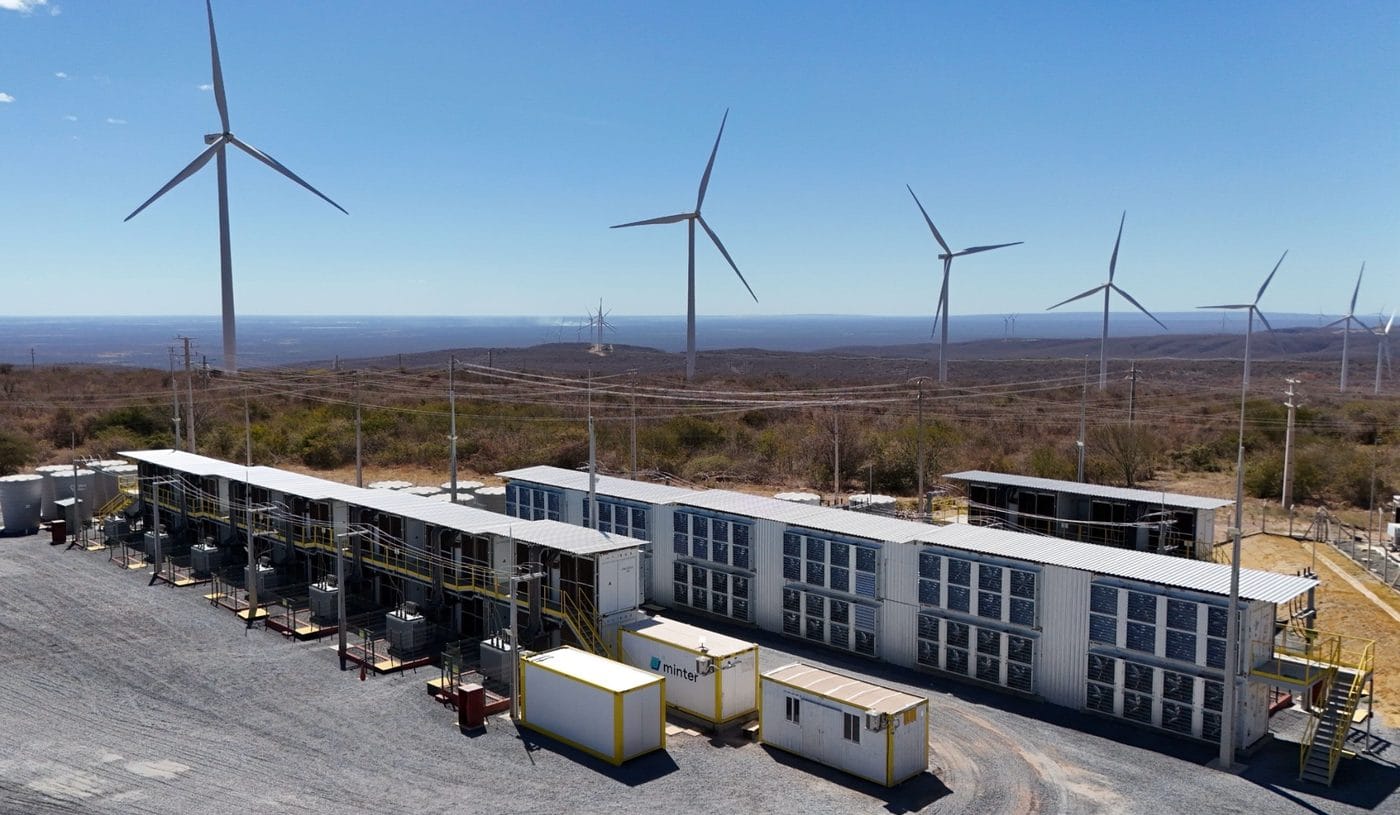
Of the four operators profiled in this article, Minter Digital is the only one with a live, institutionally-backed mining operation running at scale in Brazil today.
Minter Digital (registered as Minter Digital Ltda, with operations spanning Florianópolis and São Paulo) carries arguably the most unusual founding pedigree of any company in the Brazilian mining market. The founding team traces a direct institutional lineage to two landmark moments in the institutionalization of digital assets: the CleanSpark (NASDAQ: CLSK) public market debut in 2020, and the launch of the world’s first regulated cryptocurrency ETF through Hashdex.
The CleanSpark connection represents a master class in hyperscale infrastructure: the founders were involved in building the operational and financial architecture of one of the largest publicly traded Bitcoin mining companies in the world. The Hashdex connection represents a parallel mastery of the financial engineering of digital assets: regulated products, compliance infrastructure, and institutional capital stewardship. The combination is unusual. Most mining companies are run by either operators or financiers. Minter's founding team has deep experience at both ends, and it shapes how they build.
As Carlos Barros, the company's CFO, described it: "Minter's core thesis is to financialize mining, building products that deliver mining economics to outside investors while optimizing energy consumption for power generators. The experience of taking infrastructure companies through the public markets instilled a discipline around governance, reporting, and scalable operations that most crypto-native mining operators simply don't prioritize at early stages. We think about auditability, investor communication, and capital structure from day one, not as an afterthought before a financing round."
The company operates under a concept it calls the "Greenabler" model. Minter first deployed hashrate in 2024, when an exceptionally rainy season in Brazil pushed spot energy prices to levels highly attractive for mining. At that stage the company signed flat power purchase agreements with high uptime commitments, absorbing energy that generators had not yet contracted to other clients. As the market evolved, a more structurally interesting opportunity emerged: with a growing share of intermittent distributed solar generation gaining dispatch priority in Brazil, larger centralized plants began being pushed off the grid during peak generation hours. Unlike ERCOT in Texas, where it is load that is constrained, in Brazil it is the generation capacity itself that is prevented from injecting into the grid. Minter's response was to design a different deal structure for these situations: both Minter and the power generator allocate capital to create an intermittent mining load inside the generation site, with no fixed energy price. Instead, the economics are governed by a profit-sharing agreement that aligns both parties around maximizing the value of every megawatt-hour produced.
That deal structure is the Greenabler thesis made concrete: the mine does not merely consume power, it underwrites the financial viability of power that would otherwise be wasted.
For the next 18 months, Minter's primary focus remains the Northeast, specifically wind capacity concentrated along the coast and in the semi-arid interior of Rio Grande do Norte, Ceará, and Bahia, and solar expanding rapidly across the same geography. These are utility-scale plants with predictable generation profiles but significant dispatch constraints, which is precisely where the joint-venture model performs best.
The company received a Series A investment from Itaú Ventures, the venture capital arm of Itaú Unibanco, Latin America's largest private-sector bank. As Barros described it, the process was genuinely rewarding: once the conversations were framed around the energy angle and the potential to build new financial products on top of mining economics, they moved forward quickly. Itaú evaluated the opportunity through the lens of energy infrastructure and financial product innovation, consistent with its mandate of strategic investments that generate synergy with the bank's core businesses. The explicit goal has always been to democratize access to the industry for a broader institutional investor base. Some of the most substantive conversations revolved around the difficulty adjustment mechanism: for an institutional investor evaluating the asset class through a rigorous lens, understanding that the network itself provides a built-in competitive moat for low-cost, high-efficiency operators, and that this is structural rather than cyclical, was a critical step in building conviction around the thesis.
Minter is deploying the Itaú Ventures capital across both Brazil and the United States. On the geographic allocation question, Barros framed it as deliberate hashrate diversification across jurisdictions: single-market concentration, whether regulatory, climatic, or operational, is a risk the company takes seriously. On Brazil specifically, the Itaú Ventures partnership is focused on capturing value from renewable energy curtailment and exploring new financial products built on mining economics, not a broad endorsement of Brazil as a mining destination. On the US side, the company is actively exploring site acquisitions and commercial partnerships, with exposure to HPC and AI infrastructure as a parallel opportunity given the significant overlap in capital requirements and site characteristics. The US market also provides access to listed mining peers, analyst coverage, and deeper liquidity relevant to future financing options. The dual mandate, as Barros put it: "deploy capital efficiently in a developed market, while doing the work to build a new one."
Arthur Mining: The Blueprint
Arthur Mining, incorporated as Arthur Inc., was founded by Brazilian entrepreneur Rudá Pellini, and has been identifying, building, and operating Bitcoin mining infrastructure since 2017 — almost a decade in the business. The founding thesis was simple to state and difficult to execute: monetize idle and undervalued energy at scale by deploying mobile, containerized high-performance computing directly to the source of that energy, rather than waiting for grid infrastructure to bring the energy to a fixed facility. Despite being founded by a Brazilian and targeting Brazil as a long-term priority, the company built its operational base and proof of concept in the United States first, systematically proving the model across South Carolina, Pennsylvania, Ohio, Indiana, Wyoming, and Oklahoma before formally initiating its Brazilian expansion.
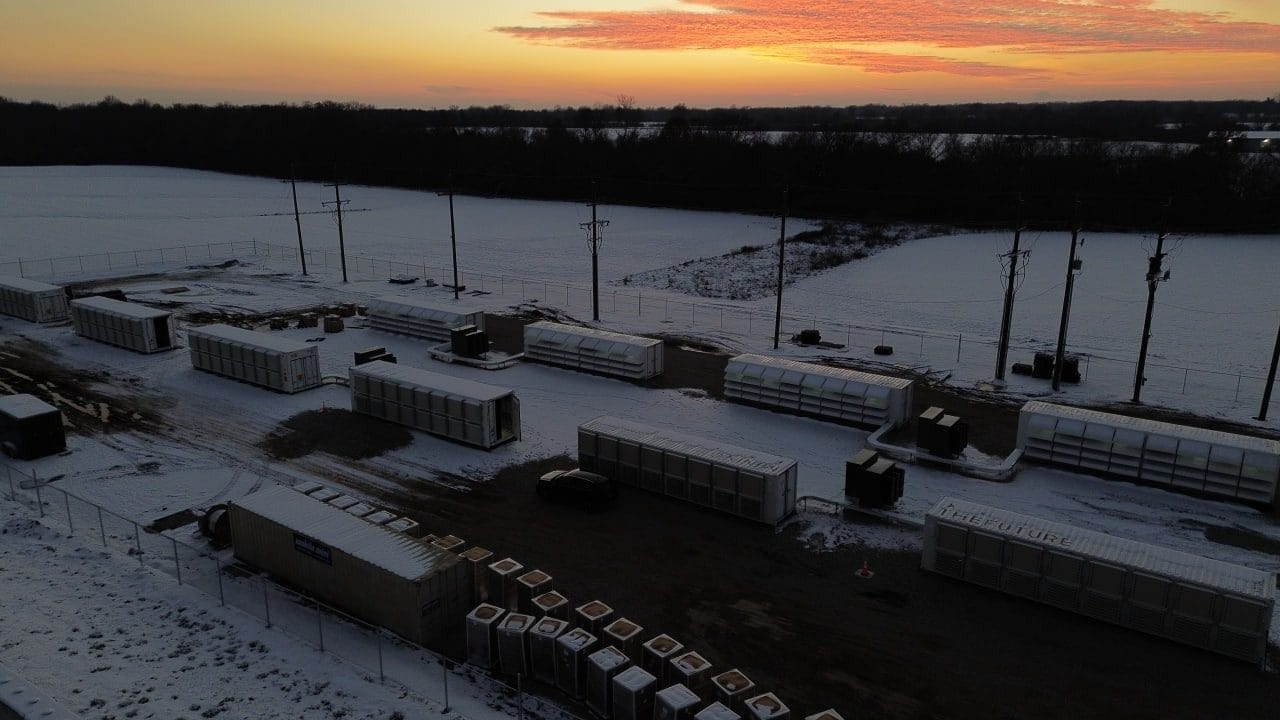
The United States remains the center of Arthur's strategy. Under the expansion leadership of Cleverton Ribeiro, the company is currently advancing a near-term US development pipeline of approximately 117 MW across six sites, on top of its existing operations. That pipeline reflects Arthur's broader approach: working the full chain from power origination to site build-out, deployment, and long-term operations. Its role is not limited to hosting machines — it also includes structuring sites, coordinating counterparties, bringing offtakers to power assets, and helping capital move into operating infrastructure.
On the transition from gas to grid-adjacent renewables in new markets, the Arthur team is candid about the learning curve. Flare gas was difficult operationally in the early years, and Brazil's attractiveness was always tied to its renewable energy base and curtailment potential rather than a direct gas play. But timing matters. As the Arthur team recalls, when Arthur first evaluated Brazil, the market was not yet fully ready: power prices did not create a clear advantage versus what an experienced operator could contract in the US, and BRL-to-USD FX exposure added a meaningful layer of risk on top of the operational complexity. The Brazil expansion in Q1 2023, backed by a $4.5 million raise from infrastructure and energy family offices at a $100 million pre-money valuation, came when those conditions had improved enough to justify the move.
The capital source for that round was deliberate. The anchor investor already owned generation infrastructure and was looking for ways to diversify and better monetize that asset. As Felipe Rosa, Arthur's Director of Growth, described it: "They were not looking at Bitcoin mining only as a crypto trade. They were also looking at the infrastructure and energy monetization layer, using mining as a flexible, revenue-generating load that could create additional value around existing power assets." That framing, mining as a grid tool rather than a speculative bet, is the lens through which sophisticated infrastructure capital has entered the Brazilian mining market.
Arthur's Brazilian operation, run through Arthur Development Group, was consistently producing 20 to 31 PH/s in recurring monthly pool settlements through late 2025 and into 2026, generating between $19,000 and $40,000 per month in pool payouts. That is a running industrial operation, not a pilot.
On what the Brazilian grid still gets wrong, Arthur's perspective is pointed. Bitcoin miners are natural dispatchable loads: they can ramp consumption when the system needs demand and curtail instantly when the grid needs relief. The problem is that Brazil does not yet have a clear framework to compensate flexible loads for that value. Texas has handled this substantially better through demand response and grid-balancing mechanisms. If Brazil created a structure where miners could monetize curtailment, demand response, or ancillary services, the Arthur team believes the market could change very quickly.
Today, Arthur is not just a Brazil story. The company operates a 10 MW site in ERCOT's Load Zone North, runs an active Commander deployment for demand response on a 10% profit-share arrangement, and has developed a Container-as-a-Service model (CaaS) with 30 Bit Shoebox units. Arthur is also FBOX's distributor for Latin America, the US, and Canada — a relationship that lets it connect the region with container infrastructure, deployment support, warranty coordination, spare-parts pathways, and field-level operating expertise. CaaS bundles access to high-quality containers with operational support, monitoring, maintenance, deployment expertise, and ongoing infrastructure management. It is currently a US-driven product, but Arthur sees a path for it in Brazil as the market matures: "The challenge for many operators is not only acquiring equipment, but deploying it correctly, operating it efficiently, managing energy conditions, and maintaining uptime over time. With the right legal, tax, and energy structure, CaaS could help bridge that gap."
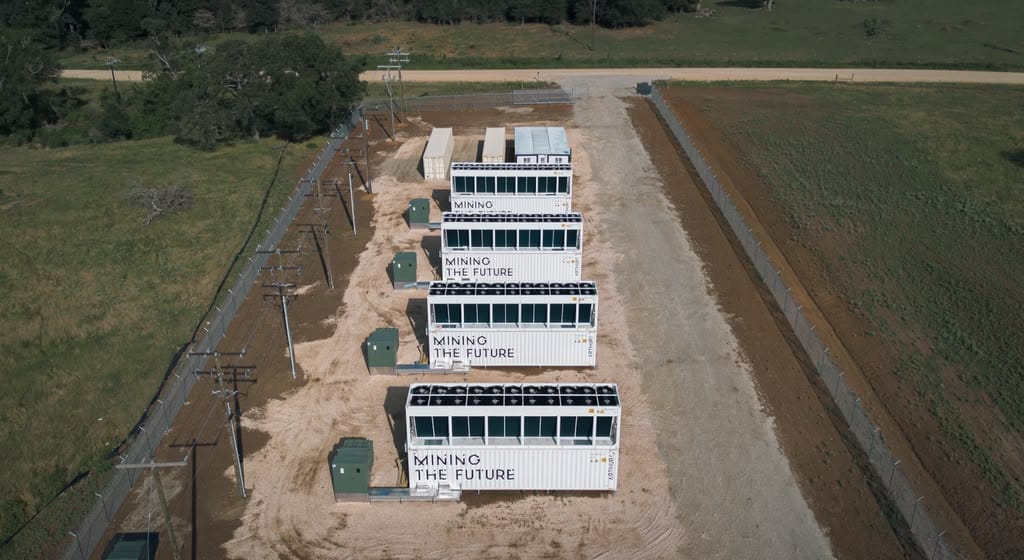
For the next 24 months, Arthur frames its Brazil position as a partnership and infrastructure play rather than a near-term hashrate expansion market. The focus is on building the right partnerships, identifying high-quality energy opportunities, and positioning for the moment when the market becomes more attractive. For a company that proved the model in Brazil before most of the market knew it was possible, patience is a strategy.
Radius Mining: Institutionalizing Curtailment Capture
Radius Mining (Radius Mineração in Portuguese) was founded by Flávio Hernandez, a former Credit Suisse banker who went on to build operational Bitcoin mining infrastructure in Brazil at the institutional level before going back in as a principal with his own company. Hernandez is not a venture-backed founder who read about Bitcoin mining. He built it — and he was there before there was a market to build into.
“At that time, there were not yet any large-scale Bitcoin mining operations running in Brazil,” Hernandez says of those early years. “What existed were projects in the structuring and development phase. We had the opportunity to take part in practically all of the main initiatives that emerged at that moment, many of which later evolved into relevant operations in the Brazilian market.” He places himself at the origin of the institutional era: “I was the originator of what was considered the first institutional investment in Bitcoin mining in Brazil — an important milestone for the industry in the country.” That vantage point shaped the thesis behind Radius. It let him, in his words, “follow closely the challenges of introducing a new segment to the electricity sector, build relationships with power generators, and help develop the market’s understanding of Bitcoin mining’s role as a flexible load and a tool for monetizing energy.”
Radius is headquartered in São Paulo and was designed from the start to solve a specific Brazilian infrastructure problem: the systematic destruction of potential revenue by renewable energy curtailment. The Northeast of Brazil has some of the world’s best wind generation capacity, but the transmission lines required to move that power to the industrialized South and Southeast have not kept pace with generation buildout. The result is that turbines are routinely commanded to stop producing power that the grid cannot absorb. Radius converts that forced revenue loss into operating revenue by deploying modular data centers directly at wind generation sites, consuming the otherwise-wasted electricity for Bitcoin mining on-site.
The foundational proof of this model came through a landmark O&M contract with Axia, the entity formed from the privatization of Eletrobras, Brazil’s former state-owned energy giant. The way Hernandez tells it, the deal grew out of the same patient, educational approach that has defined the company: “Our initial goal was to show Axia’s team the potential of Bitcoin mining as a flexible load and as a tool for monetizing underused energy resources. The first conversations came from our side. We presented the opportunity, laid out the economic and operational fundamentals of the model, and showed how mining could fit into the company’s energy strategy.” Axia moved quickly. “Credit to Axia, which quickly grasped the potential and was open to going deeper. At that point the company was just beginning to learn about Bitcoin mining’s applications in the power sector, but did not yet have operations in the area. As the conversations advanced, the initiative evolved into the pilot project in Bahia, where Radius took on operation and maintenance of the mining infrastructure.”
Partnering directly with a legacy institutional power generator of that magnitude is a validation signal the Brazilian energy and banking communities understand: Eletrobras’s successor does not enter O&M contracts with experimental companies. The Axia relationship anchors the first 6 MW proof-of-concept in Bahia and puts Radius on a credibility footing with the other large generators it is negotiating with.
The company closed a R$28 million seed round with Leonardo Mideia, founder of Prime Energy (acquired by Shell in 2023), as anchor investor. XP Investimentos directors are entering as investors with a view to launching a larger mining-focused fund once the pilot proves out. That capital profile, an energy infrastructure exit founder alongside Brazil’s largest retail brokerage, is not mining-native money chasing hashprice. It is Brazilian financial infrastructure treating Bitcoin mining as an energy asset class. Radius’s publicly stated target is 50 MW of installed capacity by the end of 2026.
Hernandez is candid that the path to 50 MW is as much a market-education problem as an engineering one. “Power generators today already have a more mature understanding of Bitcoin mining’s role as an outlet for wasted energy and as a flexible load — the concept has advanced a lot in the last few years,” he says. “But understanding the opportunity and deciding to move on a project are different things.” The bottleneck, in his telling, is governance: “In many cases the decision still depends on each organization’s governance structure and its capacity to take on risk. Companies with more concentrated ownership tend to move faster. Groups with more dispersed shareholder bases, institutional investors, or international control often face longer decision processes, since Bitcoin mining is still a relatively new segment for many of them.” His read on timing is that the structural waste is becoming impossible to ignore: “We believe the sector is reaching an inflection point where the losses from curtailment and wasted energy make the need for flexible solutions increasingly evident — creating a favorable environment for Radius to expand.”
Operationally, Radius is in active negotiations with five energy generators beyond the Axia contract. The pilot will be 3 to 6 MW proprietary in the Northeast wind market, scaling to 20 MW (6 MW proprietary plus 14 MW hosting or joint mining). Hardware preference is Bitmain S21 Hydro. On the financing side, Radius has engaged directly on hashrate forward structures to fund machine CapEx without deploying full equity upfront, signaling the kind of capital structure sophistication that distinguishes institutional miners from early-stage operators.
Vextron Technologies: Hybrid Infrastructure from the Silicon Valley of Brazil
Vextron Technologies (registered formally as Vextron Tecnologia Ltda, CNPJ 61.118.202/0001-27) commenced operations on June 2, 2025, making it the newest company in this group. It was co-founded by Luciano Benvenuti Roncalio and Paulo Henrique Momm Paganelli, with Paganelli serving as Head of Mining. Paganelli has been an active Bitcoin miner since 2018 and has been navigating the energy market side of operations since 2020, a combination that is genuinely uncommon: most Brazilian mining operators are either deep on the compute side or the energy side, rarely both.
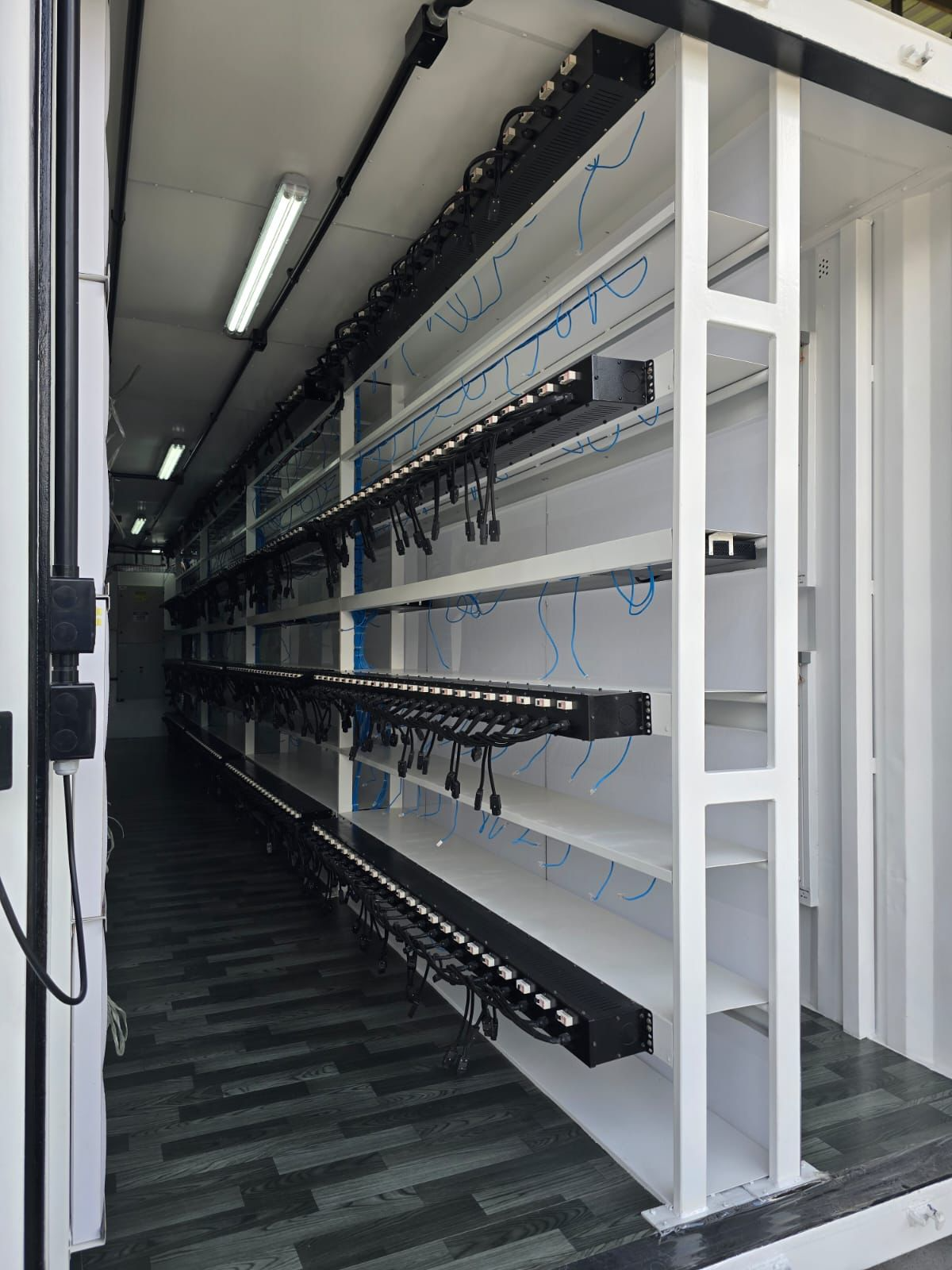
The company is headquartered inside the Edifício Celta at Parque Tecnológico Alfa, in the João Paulo neighborhood of Florianópolis, Santa Catarina. Paganelli was direct about why: "The hard part of what we build has two sides. One side is the intelligence layer: SCADA and EMS integration, the control logic that lets a load ramp up and down in seconds. That is an engineering and R&D problem, and Florianópolis is one of Brazil's strongest tech ecosystems. The other side is the physical build. Santa Catarina is also a leading industrial base for electrical equipment and the metalworking sector, which puts our electromechanical supply chain right next to where the units are engineered. The physical units still go where the wasted energy is. What stays here is the engineering, the R&D, and the supply chain that builds them."
That supply chain is not theoretical. Vextron has developed its own proprietary mining module, built entirely from components sourced from suppliers operating in Brazil, including global electrical equipment manufacturers with manufacturing presence in Santa Catarina such as WEG, Schneider, and Hitachi. The module reflects everything the team has learned in the field about what actually works and what creates operational headaches day to day. The made-in-Brazil architecture also has a practical financing advantage: locally manufactured equipment is easier to finance through Brazilian credit lines, and replacement parts are available domestically with no customs friction, no downtime waiting for international shipments, and no need for improvised field repairs.
That answer explains something important about how to read Vextron's Florianópolis base: it is not a mismatch with the Northeast wind thesis. It is the production center for the infrastructure that gets deployed there. From Santa Catarina, it is simply transport to site.
On the software side, Vextron has developed MINERA, a proprietary mining management platform designed to transform a mining operation into a smart load. When installed alongside a generation park, MINERA integrates directly with the plant's control systems, giving the generator's Operations and Dispatch Center (Centro de Operação e Despacho, or COD) full supervisory and management capacity over the mining module. This is the technical mechanism that makes the behind-the-fence model operationally credible to large generators: it is not just a mining container sitting next to a wind turbine, it is a controllable, dispatchable load that speaks the language of the generator's own control infrastructure.
On how the Brazilian market has evolved, Paganelli's perspective is worth quoting directly. In the early years, mining was met with confusion and stigma at the generator level, and every meeting started with explaining what Bitcoin mining was. The curtailment problem itself only became structurally visible around the end of 2024. Before then, most generators saw curtailment as a transmission issue for the regulator to eventually resolve, not as a revenue line they could capture themselves. Today the largest renewable generators in the Northeast are approaching operators like Vextron proactively, arriving with their own ASIC tests and internal load models already run. The question has shifted from "what is Bitcoin mining" to "show me the unit economics for my specific park." The most sophisticated generators have stopped waiting for the regulatory framework to be fully written and are co-designing the operating model with partners because they understand that the commercial structure is itself the moat.
On year one of building a mining infrastructure company in Brazil, Paganelli was candid: "Year one was less about learning to mine than about a harder problem: structuring the regulatory and metering architecture that makes a behind-the-fence operation defensible in Brazil. Large Brazilian generators are used to selling energy the conventional way. Bringing a flexible load into their power plants touches how that load is legally framed, metered and settled, and getting it right is what makes a commercial agreement solid and an operation durable rather than just physically co-located. It is complex, and it is genuinely one of the few things that separate operators in this market."
On the customs and hardware import side, Paganelli pushed back on the framing that ASIC import costs are the central challenge: "The real cost discipline in a Brazilian project is less about the ASIC import and more about the OpEx and a good deal on energy supply." The temporary admission regime has allowed many pilot projects to bring equipment in against a fraction of suspended taxes per month while ownership stays offshore, substantially changing the upfront capital requirement. For Vextron specifically, the made-in-Brazil module architecture sidesteps the import question almost entirely for the containerized infrastructure itself: no customs, no international lead times, no spare parts delay.
On the mining side, Vextron is targeting the Northeast wind curtailment opportunity with its first container deployment under active development. Hardware financing is under discussion via an Upfront Pool Payout covering approximately 10 PH/s at a 30% hash advance, cost of capital in the 9 to 9.5% range over 6 to 12 months, repaid through pool production.
Kognos Energy The Mining Consultancy Building the Bridge With Energy Producers
Every emerging mining market has a moment when the operators arrive before the infrastructure exists to receive them. Brazil is in that moment now, and Kognos Energy is one of the few companies that understood it early enough to make it a business model.
Founded in Florianópolis by Vilson Martins Filho in partnership with Eduardo Meyer, Kognos Emergy is not a mining operator. It is a strategic Open Innovation consultancy that sits at the intersection of two worlds that cannot yet speak each other's language: Brazil's highly regulated energy sector and the Bitcoin mining industry.
Vilson brings a PhD-level background in Open Innovation, a career building startup hubs, Corporate Venture Capital and Corporate Venture Building inside Brazilian universities and corporates and deep fluency with the regulatory and financial architecture of the energy sector.
Eduardo brings the operational side since 2017 on hardware procurement relationships with Bitmain and Bitmars, import logistics expertise.
Combining both knowledge, they created a fast track structure for financing, off grid regulatory framework and tax efficiency like using Santa Catarina State to eliminates ICMS tax on the import.
Vilson saw the opportunity for Mining in Brazilian energy market, and concluded that the barrier to mining in Brazil was not technical and not even primarily financial. It was translational.
Energy company boards and CFOs in Brazil do not want to hear about Bitcoin. They want to understand how their curtailment problem gets turned into a revenue line, how the regulatory framework applies to their specific generation type, and how the financing closes.
Kognos Energy built a consulting methodology on Energy Efficiency to answer exactly those questions, and deliberately frames its pitch without ever leading with Bitcoin.
As Vilson described it: "We tell them it is a financial verification data center for cryptographic digital assets. The CFO says it sounds like Pix. We say yes, it's a simmilar thing. And then we move on."
In three months from founding, Kognos Energy had its first client: A solar distributed generation operator running 2 MW of air-cooled ASICs on energy that would otherwise accumulate as unused government credits.
Under Brazil's distributed generation regulation, solar producers that generate more than they consume receive energy credits that must be spent within two years. The Innovation opportunity to mine bitcoin with solar panels, during the night, was there.
Mining converts those credits into revenue before they expire. Kognos Energy identified this regulatory mechanism, borrowed from the autoprodução law framework that Brazilian steel, and built it into a repeatable deployment model for GD operators.
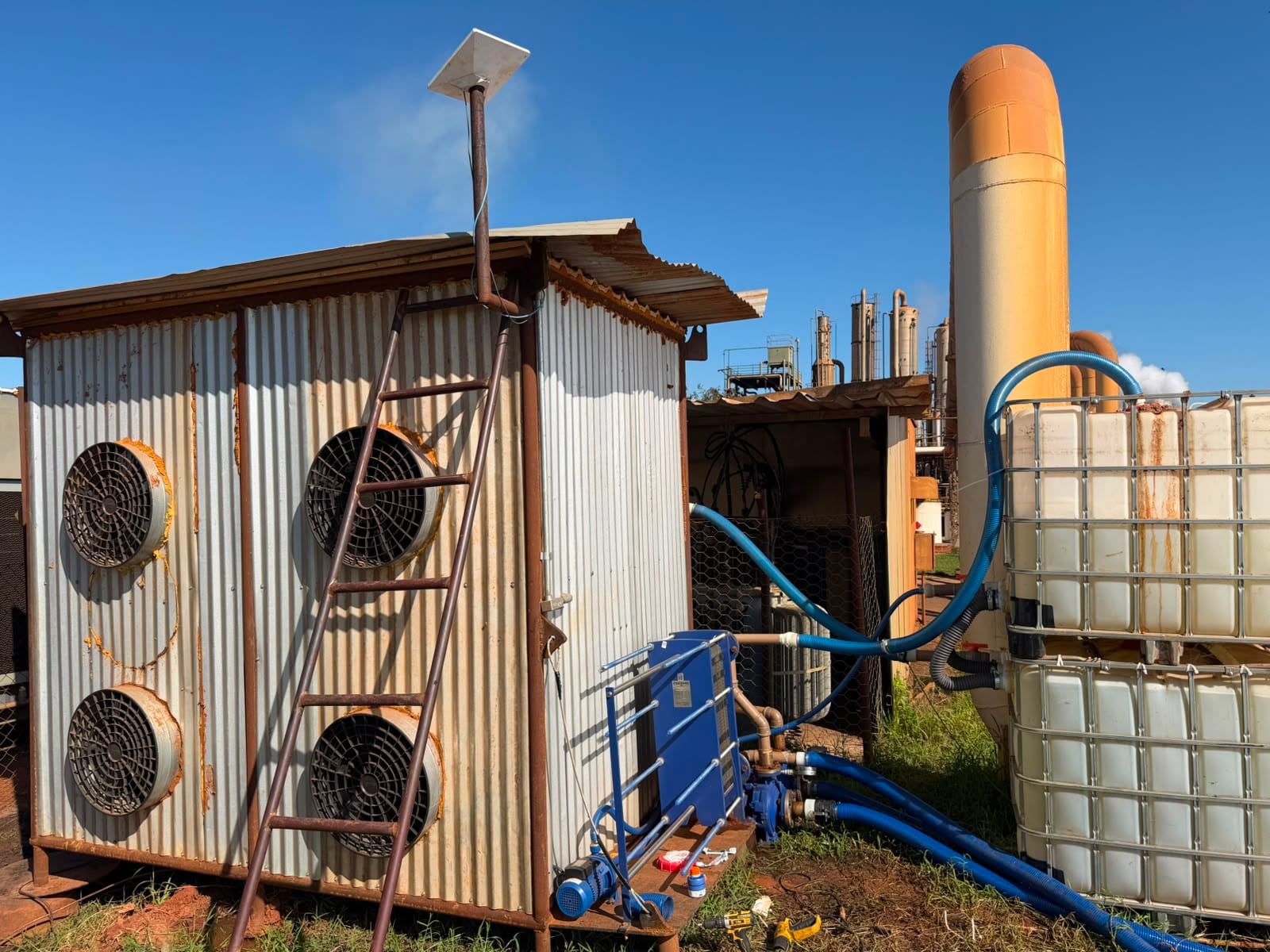
The second pillar of the Kognos Emergy model is proprietary hardware. To avoid dependence on expensive imported enclosures, Vilson designed and manufactured the Silver Box: a made-in-Brazil acoustic enclosure for air-cooled ASICs, produced on Brazil.
The Silver Box uses the same conceptual architecture but is fabricated with local suppliers and can be serviced without international lead times. Cheap, reliable, custon made for each site.
Kognos Silver Box.
Three units are currently being installed at a proof-of-concept site targeting 25 ASICs, on a small operation that will tackle 180 MW with a single generator client.
On the import side, Kognos operates through the temporary admission regime: equipment enters Brazil against suspended taxes, ownership stays offshore, and the machines are either re-exported or the import is normalized at the end of the admission period.
With the Open Innovation mindset, Vilson also identified a government innovation financing structure, through instruments like FINEP and BNDES, that allows mining hardware to be financed at 2% annual interest with a two-year grace period before repayment begins, provided the operation is structured as a research and innovation project.
Vilson's academic credentials, a CAPES 6 grade in Knowledge Management and Engenering, qualify him to enter generator sites as a researcher, which changes the import and tax treatment of the equipment entirely.
The pipeline Kognos Energy is building toward includes one of Brazil's largest utilities, signing a consultancy contract imminently, and some Northeast wind operator that has quietly accumulated eight grid connection approvals for data center loads totaling approximately 1 GW of authorized mining capacity.
The Kognos thesis is that when those conversations reach the point where the energy producer needs to understand the regulatory structure, the import framework, and the financial model, they will need a firm like Kognos Energy in the room.
Kognos Energy is not yet a mining company at scale. It is the educational, regulatory, and logistics layer that makes mining companies viable in Brazil.
In a market where the regulatory and financial complexity has kept international operators out and slowed domestic ones down, that positioning may prove more durable than operating the machines themselves.
"We are planing to create the Kognos Asset Manager, a company that will give the digital credit framework for Energy Generators, and use Bitcoin Mining as a hedge for their sites. And we are starting with a sugar cane site, making the thesis of backing bitcoin with real assets like comodities, more visible and understandable. At the right moment, this will be the standard innovation approach for the Energy and Agrobusiness sectors" says Vilson.
Find out more about Kognos Energy at www.kognosenergy.com
Closing Paragraph on The Operators
These five operators do not represent the full Brazilian market, and they are not at the same stage. Minter Digital is the most operationally mature: live since 2024, with deployed fleets, active energy contracts, and a Series A from Itaú Ventures. Arthur Mining proved the thesis early with a real Brazilian operation, but its center of gravity has always been the United States, and its Brazil footprint never reached the scale its founders originally envisioned. Radius Mining and Vextron Technologies are the next generation: well-credentialed, well-capitalized, and building with serious intent, but pre-scale at the time of publication. Radius has its Axia contract and R$28 million in seed capital but has not yet deployed hardware at scale. Vextron has its first container and MINERA platform in development. Both are building toward something real. That staging matters. Every market has a moment when the infrastructure layer is being laid and the operators who will eventually dominate it are still closing their first energy contracts. Brazil is in that moment now.
The Customs Roadblock Nobody Talks About
One of the biggest operational barriers to scaling Bitcoin mining in Brazil is not energy. It is hardware.
For US-based operators accustomed to buying machines out of Hong Kong or off a domestic broker and having them arrive at a Texas substation in two weeks, the Brazilian import process is a genuine shock. It is not a bureaucratic inconvenience. It is a multi-layered tax and licensing system that, if mishandled, can add 30 to 50 percent to your all-in hardware cost and delay deployment by months. Understanding it is not optional. It is a prerequisite for doing business.
The DECEX License: The One Thing That Blocks Everything
Brazil prohibits the importation of used goods without a non-automatic import license, issued by DECEX, the Departamento de Operacoes de Comercio Exterior, which operates under the Ministry of Development, Industry, Commerce and Services (MDIC). This is the central constraint that most international operators do not anticipate.
Here is how it works. Before a single used ASIC can clear Brazilian customs, the importer must file a Licenca de Importacao (LI) application through the SISCOMEX system, which is Brazil’s integrated foreign trade management platform. DECEX reviews the application, evaluates whether a domestic equivalent exists (the “similar nacional” test), and either approves or denies the license. For used mining hardware, which has no domestically manufactured equivalent in Brazil, approvals are generally granted. But the timeline is unpredictable. Processing can take anywhere from 15 to 60 days, and that range is real: operators with well-organized documentation and a competent despachante aduaneiro (licensed customs broker) can get through in two to three weeks. Operators who file incomplete documentation, or who engage a broker unfamiliar with mining hardware classification, regularly sit at the longer end of that range or face outright requests for supplemental information.
The practical consequence: used ASICs cannot be shipped first and cleared later. The LI must be filed and approved before the machines leave origin. That means any deployment timeline for used hardware needs to account for a DECEX buffer at the front end, before freight even begins.
New machines do not require a DECEX license. A brand-new S21 Pro ships under an automatic import license and clears faster. The cost trade-off between new and used hardware in Brazil therefore has an additional dimension that does not exist in other markets: used machines are cheaper per terahash but carry a mandatory licensing delay and additional documentation requirements that new machines do not.
NCM Classification: The Tax Decision You Cannot Ignore
NCM stands for Nomenclatura Comum do Mercosul, Brazil’s harmonized product classification system based on the Mercosur common tariff schedule. Every product that enters Brazil gets assigned an NCM code, and that code determines which taxes apply and at what rate. For ASIC miners, the classification is contested, and the difference between getting it right and getting it wrong can be tens of thousands of dollars on a mid-sized shipment.
There are three NCM codes that brokers and importers have used for Bitcoin mining hardware, and they produce very different tax outcomes:
NCM 8473.30.49 covers “parts and accessories for machines of heading 84.71,” which is the computer and data processing equipment heading. Under this classification, the Imposto de Importacao (II, Brazil’s import duty) is 0% and the IPI (Imposto sobre Produtos Industrializados, a federal excise tax) is also 0%. This is the most defensible classification for ASIC miners because they are SHA-256 computing devices, purpose-built for a specific mathematical operation, and fit reasonably within the parts/accessories framework for computing equipment.
NCM 8471.50.10 covers “processing units” for automatic data processing machines. Some brokers use this classification and also quote II at 0% and IPI at 0%. In theory the tax outcome is similar to 8473.30.49, but in practice the classification can be challenged by customs auditors who argue that ASICs are not general-purpose processing units. The defensibility of this classification is weaker, and inconsistencies between what a broker quotes verbally and what actually appears on their import documentation have created significant problems for operators. A broker who tells you verbally that they will use 8471.50.10 at 0% II and 0% IPI but submits documentation using a different code can expose you to a customs dispute after the fact.
NCM 8543.70.99 is the residual category for “other electrical machines and apparatus, not elsewhere specified.” If an auditor decides your ASIC does not fit neatly into the computing equipment headings, it may land here. Under this code, II runs at 14% to 16% and IPI at 15%, which on a shipment of 177 S19J Pro units at $0.80/TH produces an import duty and excise bill that can exceed R$30,000 before state taxes are even added. This is the classification outcome you are trying to avoid, and it is the one that will appear on your import quote if your broker does not know what they are doing.
The recommendation from operators who have worked through this: insist that 8473.30.49 is the classification of record before any documentation is filed. Get it confirmed in writing by your despachante, not verbally. And if a broker proposes to use their own import company to purchase the hardware on your behalf and resell it to you after clearing customs, treat that as a serious red flag. That structure sometimes appears in the market accompanied by the claim that importing used goods is “illegal” in Brazil, which is not accurate. Used goods can be imported; they require a non-automatic license through DECEX. A broker proposing to intermediate the purchase is either working around a registration issue or extracting margin from the structure that should belong to you.
The Full Tax Stack
Even with the best NCM classification and a clean DECEX license, importing hardware into Brazil carries a layered tax obligation that US operators need to model before committing to a deployment.
The Imposto de Importacao (II) is the customs duty, applied as a percentage of the CIF (cost plus insurance plus freight) value of the goods. Under NCM 8473.30.49, this is 0%. Under less favorable classifications it can reach 16%.
The IPI (Imposto sobre Produtos Industrializados) is a federal excise tax levied on industrialized products. For computing equipment under 8473.30.49, this is also 0%. For hardware that lands under the residual 8543.70.99 classification, IPI can run 15%.
PIS and COFINS are federal social contribution taxes on imports. These apply regardless of NCM classification. PIS runs at 2.1% and COFINS at 7.6%, for a combined 9.65%, calculated on the customs value plus II plus IPI.
ICMS is the state-level value-added tax on goods circulation. This is where the numbers get jurisdiction-specific. ICMS rates on imported goods vary by state: Sao Paulo is typically 18%, while other states range from 12% to 20%. Crucially, ICMS is calculated on a “cascaded” basis that includes the other taxes in its base, so the effective rate is higher than the headline percentage. Some states offer ICMS exemptions for energy-intensive industrial equipment, and operators deploying at scale should investigate whether their target state has such a program.
The Taxa SISCOMEX is a fixed administrative fee of R$214.50 per import declaration, plus a per-item variable component. This is not a meaningful cost on a large shipment but it is part of the total.
AFRMM, the merchant marine renewal fee applied to sea freight, does not apply to land-border imports from Paraguay. For shipments arriving by sea from Asia, it adds approximately 25% on top of the ocean freight cost.
Taken together, on a clean import of used ASICs under NCM 8473.30.49, the all-in tax burden is dominated by PIS/COFINS (9.65%) and ICMS (12 to 18% depending on state), with II and IPI at zero. The total federal-plus-state tax burden on a well-structured import is typically in the range of 25 to 35% of CIF value. On a poorly classified import under 8543.70.99, the same shipment can carry a tax burden exceeding 55% of CIF value. The difference between a knowledgeable despachante and an uninformed one is not a minor cost variance. It is the difference between a viable deal and an unviable one.
The Documentation Stack
A complete import filing for used ASICs into Brazil requires the following documents. Some come from the exporting country; others must be prepared by or for the Brazilian importer:
From the exporter: a commercial invoice (fatura comercial) in Portuguese or with a certified translation, a packing list detailing unit counts and serial numbers, the bill of lading or CRT (Conhecimento de Transporte Internacional) depending on shipping mode, proof of payment for the goods, and the export clearance documentation from the origin country (despacho de exportacao finiquitado in the case of Paraguay).
From or for the importer in Brazil: a condition assessment or state-of-conservation report (laudo de avaliacao) for the used equipment, the LI (Licenca de Importacao) filed and approved via SISCOMEX before shipment, the Declaracao de Importacao (DI) or its successor DUIMP filed in SISCOMEX at time of customs entry, and an active RADAR registration.
RADAR (Registro e Rastreamento da Atuacao dos Interventores Aduaneiros) is Brazil’s Receita Federal system for vetting who is authorized to conduct foreign trade operations. Every Brazilian entity that imports goods must be RADAR-registered. There are two tiers: a simplified RADAR for smaller importers and a parameterized RADAR for larger operations that requires demonstrating financial capacity proportional to import volumes. Operators who are new to the Brazilian market frequently overlook RADAR registration as a prerequisite and discover the gap only when their first import is ready to clear. Getting RADAR registered can take weeks and requires engagement with the Receita Federal. It needs to happen before any documentation is filed, not after.
What This Means for US Operators Entering Brazil
The customs framework is manageable, but it rewards preparation and punishes shortcuts. The operators who are currently building in Brazil (Arthur Mining’s alumni network, the Radius Mining and Vextron generation) have navigated this system already. They have RADAR-registered entities, established despachante relationships, and experience with the DECEX LI process for used hardware.
An American operator who wants to deploy in Brazil faces a genuine onboarding cost that is not present in Paraguay or El Salvador. The first shipment into Brazil requires standing up a Brazilian legal entity, obtaining RADAR registration, engaging a despachante who understands computing equipment classification, and building in the DECEX timeline before any machines are purchased. That is two to four months of lead time before a single machine is operational, even if everything goes correctly.
The operators who will succeed in Brazil at scale are the ones who treat this as a one-time infrastructure investment rather than a recurring operational cost. Once the legal entity, the RADAR registration, and the despachante relationship are in place, subsequent shipments clear faster and the competitive advantage compounds. The Brazilian operators who have already made that investment are several moves ahead of any international entrant starting from scratch today.
There is a structural opportunity here for a containerized, turnkey model that bundles the customs navigation into the deployment package. Several discussions in the Brazilian market in 2026 centered on exactly this: a Mining as a Service approach where hardware sourcing, firmware, insurance, and import logistics are bundled into a single offer for operators who want Brazilian exposure without the infrastructure build-out. The containerized model also provides a mobility advantage that fixed-site data centers do not. In a market where energy contracts are still maturing and regulatory frameworks are evolving, the ability to relocate capital physically is worth real money.
The Energy Map: Where to Mine in Brazil
Not all Brazilian energy is equal for mining. The geography of cost and risk breaks down roughly as follows:
Sul (Rio Grande do Sul, Santa Catarina, Parana) is the most mature mining region. Lowest industrial tariff (~$0.045/kWh), established hydro network, reliable grid, close to port infrastructure for hardware. The default choice for operators who want predictable economics.
Mato Grosso and Centro-Oeste offer large available land and access to cheap biomass and hydro generation, with potential for direct PPAs with renewable generators. Tariffs are higher on default contracts (R$824/MWh in Centro-Oeste), but ACL access mitigates this significantly for large operations.
The Northeast is the most interesting and most complicated region. The wind energy economics at generation level are exceptional. The Nordeste wind belt produces some of the highest-capacity-factor renewable energy on the continent, and the curtailment problem means generators are actively looking for load. The Leilao 001/2024 transmission expansion program is expected to begin unlocking Nordeste wind access for new loads from 2026 onward. Operations like Radius Mining that are positioned in the Northeast now, with energy contracts being negotiated this year, are buying the option on that transmission buildout at pre-expansion prices.
The risk in the Northeast is real: curtailment events, Bandeira Vermelha exposure on captive contracts, and GSF tail risk on bilateral hydro contracts. ACL structuring matters. Generator counterparty due diligence matters. But the upside is structural: if you solve the energy contract structure and get in before the transmission bottleneck is resolved, you access some of the cheapest renewable generation in the world.
The Financial Infrastructure Is Arriving
One of the most important signals that Brazil is transitioning from an emerging to a maturing market is the arrival of institutional financial infrastructure around mining.
Hashrate forward financing, the mechanism that allows miners to monetize future production to fund hardware capex, is being actively explored by Brazilian operators. The model works as follows: an operator receives upfront capital in exchange for committing future hashrate production through Luxor Pool. The capital covers ASIC purchases. The payback runs through the pool until the contract completes. For a market where ASIC import costs are high and institutional lending is limited, this structure fills a critical gap.
The investor base is also sophisticating. Radius Mining’s R$28 million seed round is not a community raise. It includes a founder who sold a company to Shell for half a billion reais and XP Investimentos directors. That is institutional capital entering Bitcoin mining as an asset class, not retail mining enthusiasm.
Ethan Vera, Luxor’s COO, has explicitly identified Brazil as one of the next major emerging market opportunities in Bitcoin mining. That assessment is not abstract. Brazil is large enough to matter to global infrastructure providers, sophisticated enough to engage with complex financial products, and growing fast enough that the window for early positioning is now.
What Holding 3.5 EH/s Actually Means
The story Brazil’s hashrate tells changed character between Q2 and Q3 2026, and the new version is arguably more convincing than the old one.
Through early 2025, the story was raw growth: Brazil roughly doubled its hashrate inside a year, from ~1.5 EH/s to a 4.0 EH/s peak by the end of 2025. That pace has since cooled. Brazil has held at 3.5 EH/s for three of the last four quarters — the easy, build-anything phase of the cycle is over.
But look at what happened around it. Over the most recent quarter, global network hashrate fell from ~1,004 EH/s to ~940 EH/s, a 6.4% contraction. Nearly every major jurisdiction shed hashrate in absolute terms: the US dropped from ~375 to ~345 EH/s, Russia from ~170 to ~162, China from ~120 to ~115, Kazakhstan from ~18 to ~15. Brazil held flat. In a quarter when the global fleet powered down, Brazilian operators kept their machines running — and Brazil’s share of global hashrate rose to ~0.37%, back to the high it set at the end of 2025.
Brazil’s 3.5 EH/s is still only ~0.37% of global hashrate. That is not dominance. But a country that holds its load steady while the rest of the network contracts is demonstrating exactly the conviction the rest of this report describes: capital that was formed, hardware that was imported, and sites that were built to run through the cycle, not to flip on a hashprice spike. The operators who hold through the down-leg are the ones positioned to capture the upside when it turns. Brazil’s 3.5 EH/s is not a ceiling. It is a base — and it just proved it can hold.
The Bear Case: What Could Slow This Down
The Brazilian mining story is real, but it is not without risk. The factors that could slow growth are worth naming directly.
The tax burden is structurally high. At 44.8% of gross sector revenue in taxes and charges, the cost of doing business on default contracts is a meaningful headwind. ACL structures mitigate this, but they require scale and sophistication to access. Small operators on captive contracts face a tougher math.
The transmission problem in the Northeast is not solved. Leilao 001/2024 is a positive signal, but infrastructure takes years to build. Operators banking on Northeast wind economics need to underwrite realistic timelines for when that energy becomes reliably accessible.
ASIC import logistics remain friction-heavy. DECEX processing time is unpredictable. Operators that get their customs strategy wrong face significant delays and cost overruns on hardware deployment.
The regulatory environment for Bitcoin mining in Brazil is not actively hostile, but it is also not structured. There is no specific mining regulation, no clarity on treatment under the energy regulatory framework, and no formal government policy position on the sector. For now, that ambiguity allows the market to develop. If regulatory clarity eventually arrives, the question is whether it favors or constrains the industry.
Conclusion
Brazil is not a speculation about what might happen. It is a market in active formation, backed by real infrastructure investment, real institutional capital, and real operator expertise built through years of on-the-ground mining experience.
The structural case is strong: world-class renewable capacity at competitive cost, a deregulated energy market now open to large consumers, a growing base of locally sophisticated operators, and a financial ecosystem that is beginning to support mining as an asset class.
The operators who matter are not waiting for the conditions to be perfect. They are building into the complexity, negotiating energy contracts in the Northeast before the transmission buildout lands, structuring hardware imports through established licensing channels, and raising institutional capital from investors who understand what the asset class can deliver.
Doubling its hashrate into the teeth of a down-cycle — and then holding it flat while the global network contracted around it — is the signal. The question is not whether Brazil becomes a major Bitcoin mining jurisdiction. It already is one. The question is how large it gets, and how fast.
— Happy Hashing!
About Luxor Technology Corporation
Luxor delivers hardware, software, and financial services that power the global compute and energy industry. Its product suite spans Bitcoin Mining Pools, ASIC Firmware, Hardware trading, Hashrate Derivatives, Energy services, a Miner Management software, Commander, and a bitcoin mining data platform, Hashrate Index.
Disclaimer
This content is for informational purposes only, you should not construe any such information or other material as legal, investment, financial, or other advice.


Hashrate Index Newsletter
Join the newsletter to receive the latest updates in your inbox.





)