Inside South America’s Biggest Bitcoin Mining Facility: HIVE Digital Technologies Yguazú Site
A look inside South America's largest Bitcoin mining campus (240 MW) designed to beat 42°C Paraguayan summers, and expand into Tier III data centers.


This article is a follow-up to The State of Bitcoin Mining in Paraguay (2026). In that piece, we described HIVE Digital Technologies as “the giant in the room.” For this one, Luxor visited HIVE’s Yguazú site to share what the room actually looks like.
TLDR
- HIVE Digital Technologies Yguazú campus operates 200 MW across three 80 MW transformer bays and contributes 12.15 EH/s to global network hashrate — making it one of the largest single Bitcoin mining sites in the world outside the United States.
- The fleet runs roughly 56% air-cooled and 44% hydro-cooled, anchored by Bitmain Antminer S21+ and S21+ Hydro units, with smaller batches of MicroBT, Avalon, and a residual fleet of in-house Intel BuzzMiners.
- The digital gold is in the details: a locally-designed adiabatic cooling system that maintains operations through 42°C peak heat, proprietary mine management software, and a 24/7 control room running on dual-redundancy fiber and in-house software. HIVE is also helping ANDE digitalize its dispatch signals and automate flexible load control in real time.
- The next phase of substation infrastructure is already under construction, and a separate parcel at the south end of the campus is being civil-engineered to Tier III specifications — operating as Tier I today, optionality on HPC tomorrow.
On a damp May morning in Yguazú, the rain came down in sheets just long enough to turn the access road into red clay, then cleared into a humid overcast that would hang over the campus for the rest of the visit. We were there to spend a day with HIVE Digital Technologies' team at the company's primary Paraguayan campus, walked through by HIVE’s Country General Manager alongside the operations team. What follows is what we saw.
Scale: 200 MW, ~20 hectares, and expanding
Yguazú started as a 20-hectare parcel and recently disclosed having bought 73 additional hectares. The installed capacity sits at 240 MW today, distributed across three 80 MW transformer bays. That capacity feeds the 12.15 EH/s the company publicly attributes to this site — a figure that, on its own, makes Yguazú one of the largest single Bitcoin mining facilities in the world outside of the United States. The scale only really registers when you walk one of the halls end-to-end.
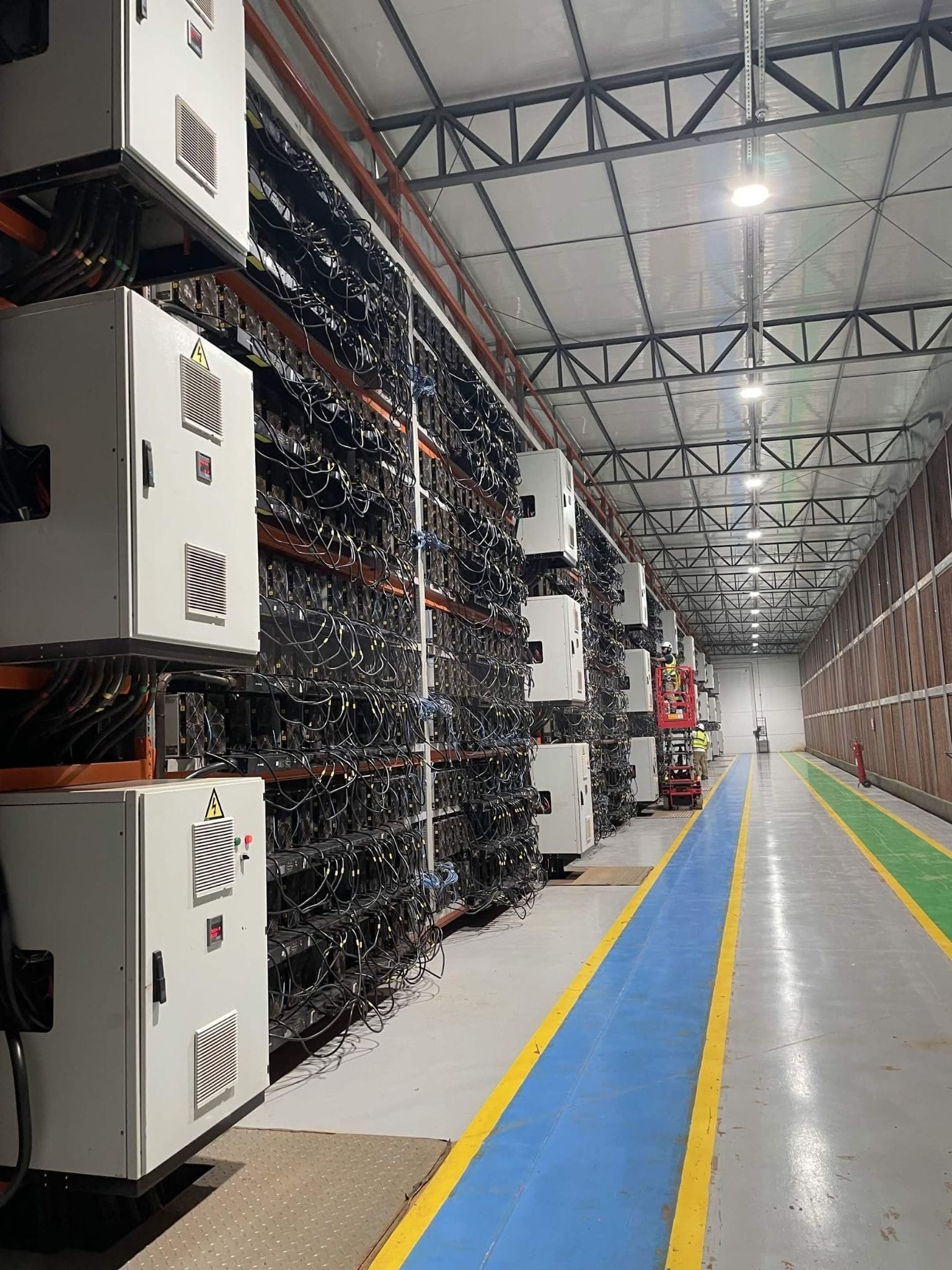
Inside the halls: air and hydro, side by side
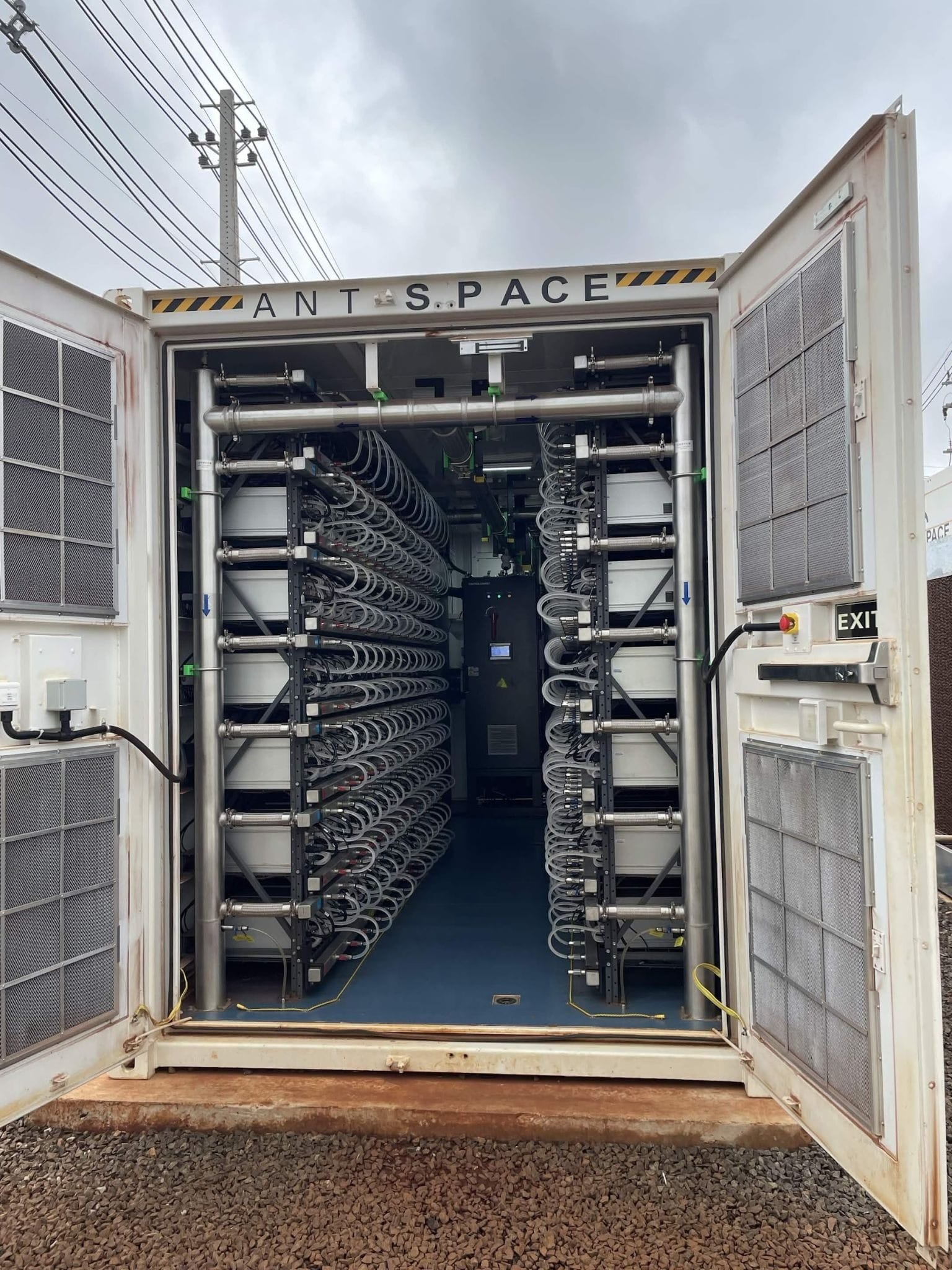
HIVE's hardware strategy at Yguazú is visible from the moment you step into the first building. Roughly 56% of the deployed hashrate runs air-cooled (predominantly Bitmain Antminer S21+ units, with smaller batches of Avalon A15, S21 XP, and a residual fleet of Intel BuzzMiner units). The remaining ~44% is liquid-cooled, almost entirely Antminer S21+ Hydro.
In practice, this translates into two distinct types of facilities on campus. The air-cooled buildings feel like an extremely well-organized industrial Bitcoin mining facility: racked machines, walls of fans, control cabinets sitting at every column, a high steel-truss roof, and crisp floor markings keeping people clear of the active aisles.
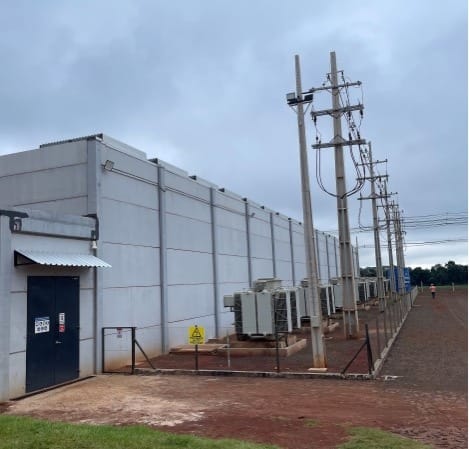
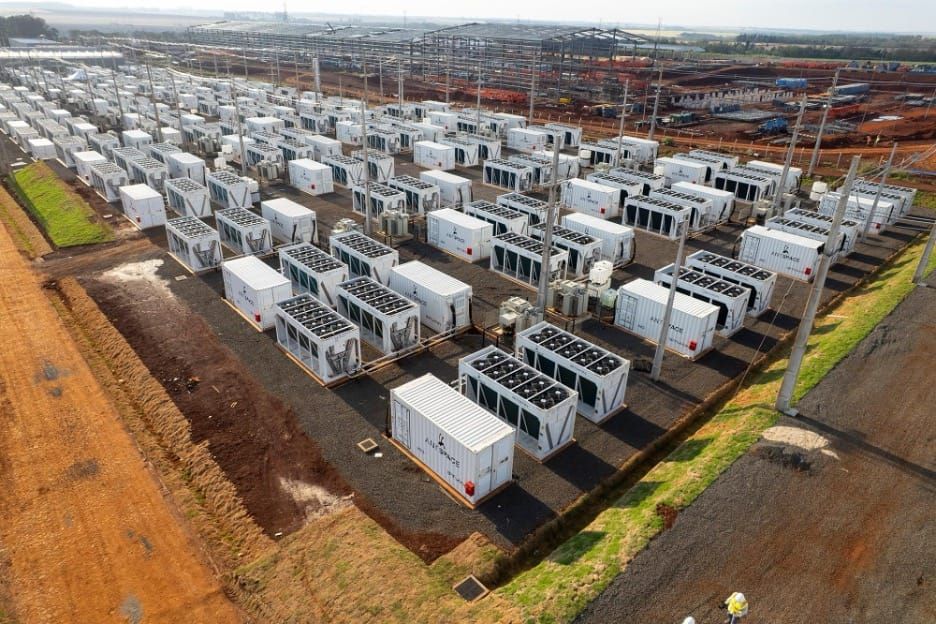
In front of the warehouses, hydro container fleets are staged. We went into one — a Bitmain AntSpace unit. The ambient noise drops noticeably as machines transfer heat into water, avoiding fan-wall acoustics.
A few machines tell a more interesting story than the spec sheet. In a corner of the site sit Yguazú's two custom Intel BuzzMiner platforms — co-designed several years ago, manufactured in partnership with Intel. They're offline today, shut down a couple of months ago when their performance profile clashed with current hashprice and stopped clearing the energy bill. The team keeps them on the floor — a piece of the site's history that may not come back.
The 42°C problem, solved locally
Paraguay's summer is hot. Hotter than Texas. Yguazú regularly hits 38°C through the season and pushes into the low 40s on the worst days. ASICs lose efficiency rapidly above 35°C, and prior to a key infrastructure upgrade, the site was shedding 20–30% of its production on the hardest days of the year.
The fix was engineered and built locally. HIVE’s team designed a custom adiabatic cooling system that retrofits onto the existing containers.
Each platform carries two 30,000-liter water tanks, 60,000 liters of buffer per platform, and consumes roughly 100,000 liters per platform per day in peak heat. On 42°C days, the site now holds production with minimal losses.
“We don't consume water. We transform it.”
— Country Site President (Yguazú), HIVE Digital Technologies
This system was not procured from a vendor; it was designed in-house and fabricated by local contractors. This is the kind of vertical integration that doesn't show up in a slide deck but is, in practice, what keeps an industrial site like HIVE’s campus profitable through a Paraguayan summer.
SCADA, cells, and dual-redundancy fiber
The substation yard at the front of the campus is the largest single piece of dedicated infrastructure on site. Three transformer bays at 80 MW each step the incoming feed down, and a row of 25 medium-voltage cells at 23 kV (each rated to 50 MW, currently operating up to 30 MW) distributes load out to the mining buildings.
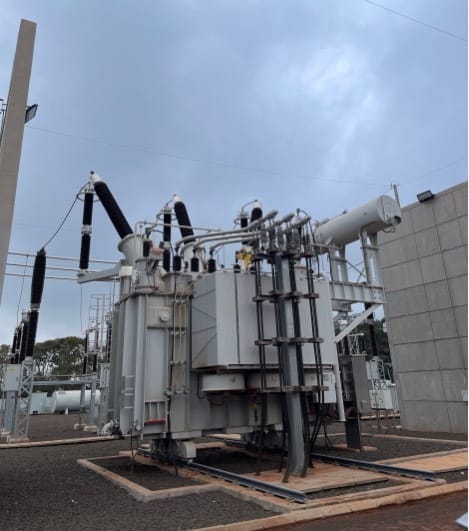
Communications across the substation, control room, and machine network run on a dual-redundancy fiber architecture: Channel A and Channel B with automatic failover, designed so that a single fiber cut, transceiver failure, or relay glitch can't darken the site. The SCADA system monitors every relay state, voltage, current, transformer winding and oil temperature, alarm, and event, with full historical trend data behind it.
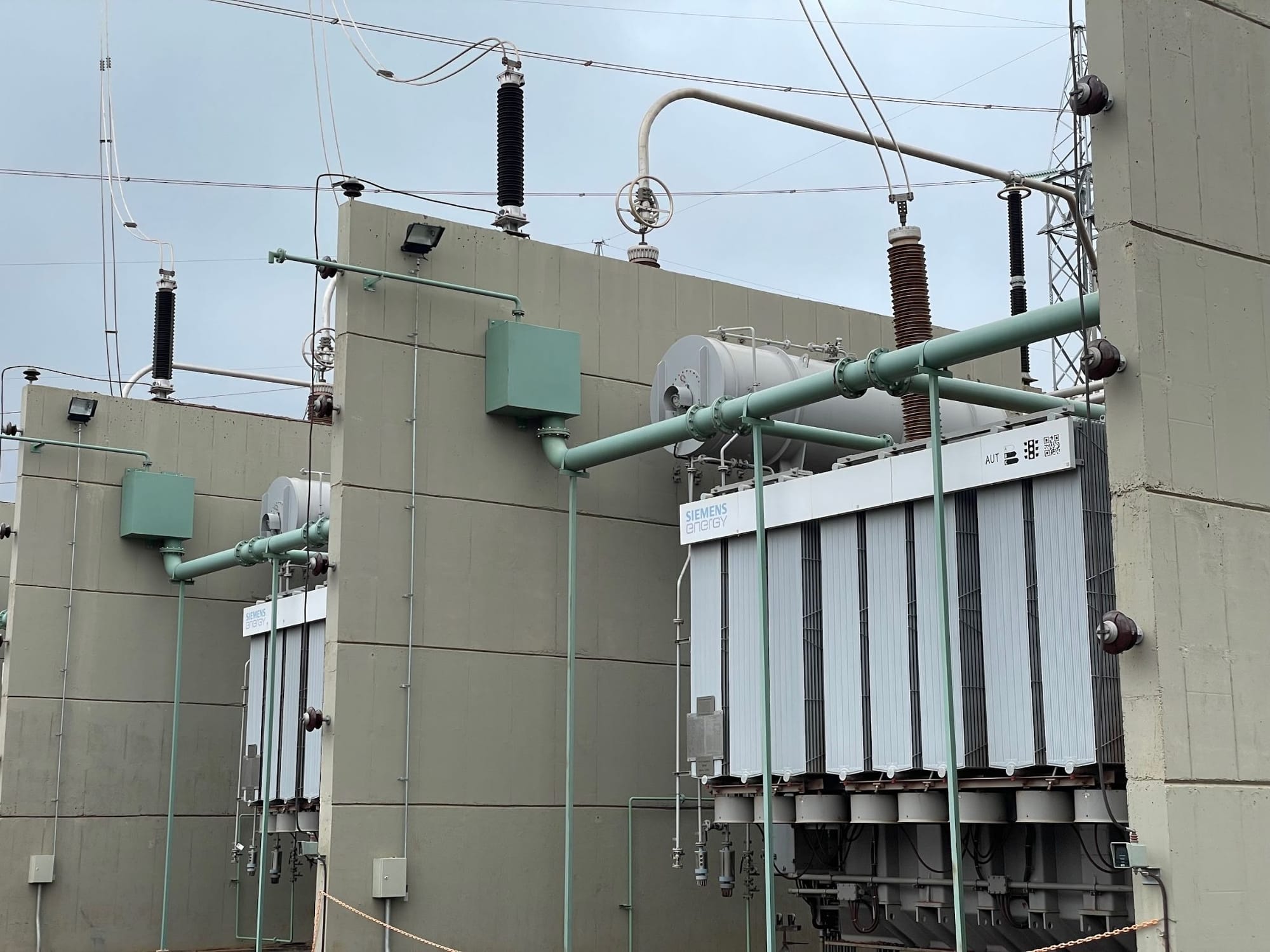
This is exotic Paraguayan electrical engineering expertise at its best. The difference between a 240 MW campus that can run 200 MW of flexible load, and one that doesn't is, in large part, due to the expertise required to build the substation, the SCADA stack, the control room, proprietary mine management software and the communications redundancy this way from day one. Yguazú reads as a site that was.
Proprietary software stack
We asked which third-party mine management software the site uses. The answer was: none of it. HIVE's monitoring system at Yguazú is fully developed in-house. The platform integrates the SCADA layer, scans the fleet (by individual unit or by group), logs alerts in real time, and dispatches technicians from a 24/7 control room. The team's view is straightforward: no external solution fits the integration requirements of a site this size with this hardware mix, so they build what they need.
ANDE: digitalizing the grid
Paraguay's national utility, ANDE, currently coordinates curtailment with HIVE through direct communication channels. HIVE is actively helping ANDE digitalize its dispatch signals and automate flexible load control. The energy-meter-to-ANDE-server interface is already live, with real-time consumption data flowing between HIVE and ANDE. The next step is a direct API interface that will let ANDE request load reductions programmatically, with HIVE's system executing automatically without human intermediation. What HIVE is building is a dispatchable 300 MW load that can respond to grid signals in near real-time, automatically. That is not just good for HIVE. It is structurally valuable for the Paraguayan grid, and a direct argument for why large-scale Bitcoin mining is a feature of the national electrical system, not a strain on it.
Building Tier III for AI/HPC, operating Tier I Mining in Between
The defining strategic thesis of the campus came up about an hour into the tour. The framing was direct: the civil infrastructure that supports a Tier I Bitcoin mining facility (the building shell, the substation, the grid connection, the cooling envelope) is the same civil infrastructure that supports a Tier III AI/HPC data center. The difference is in the equipment inside.
This insight drives the build sequencing at Yguazú. The civil work is being executed to Tier III specifications from day one. The site operates as Tier I today, monetizing energy through Bitcoin mining while the AI/HPC demand profile matures. When that demand arrives at a price that justifies the swap, the internal equipment changes; the shell does not.
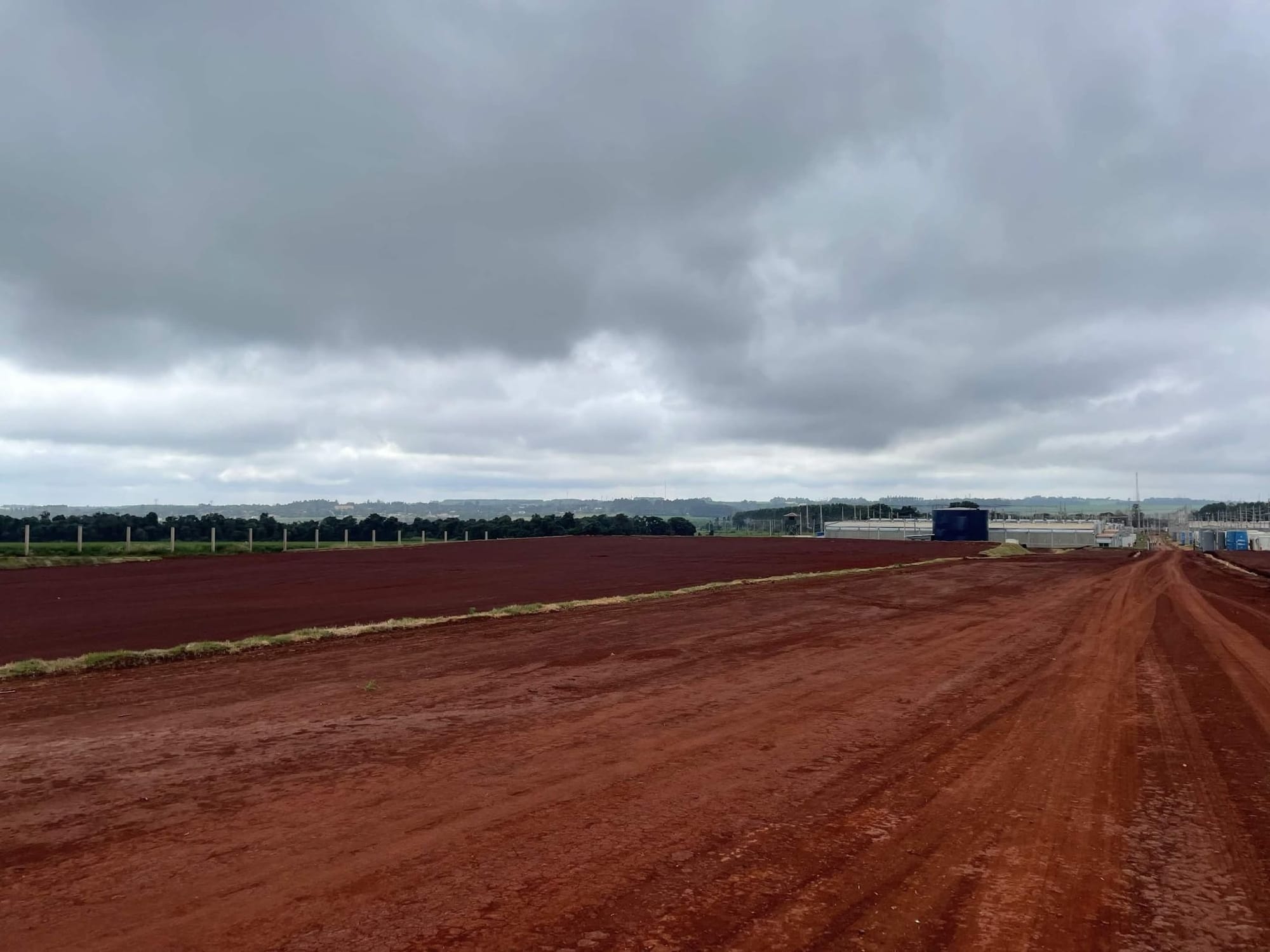
At the south end of the campus, the team showed us the cleared parcel set aside for the eventual Tier III zone.
The next phase, in the ground
The expansion is already underway. New substation infrastructure is going up toward the back of the campus, with foundation work and steel in place on the day we visited. The bottleneck is the same one every site at this scale faces: substation readiness, not megawatts on paper.
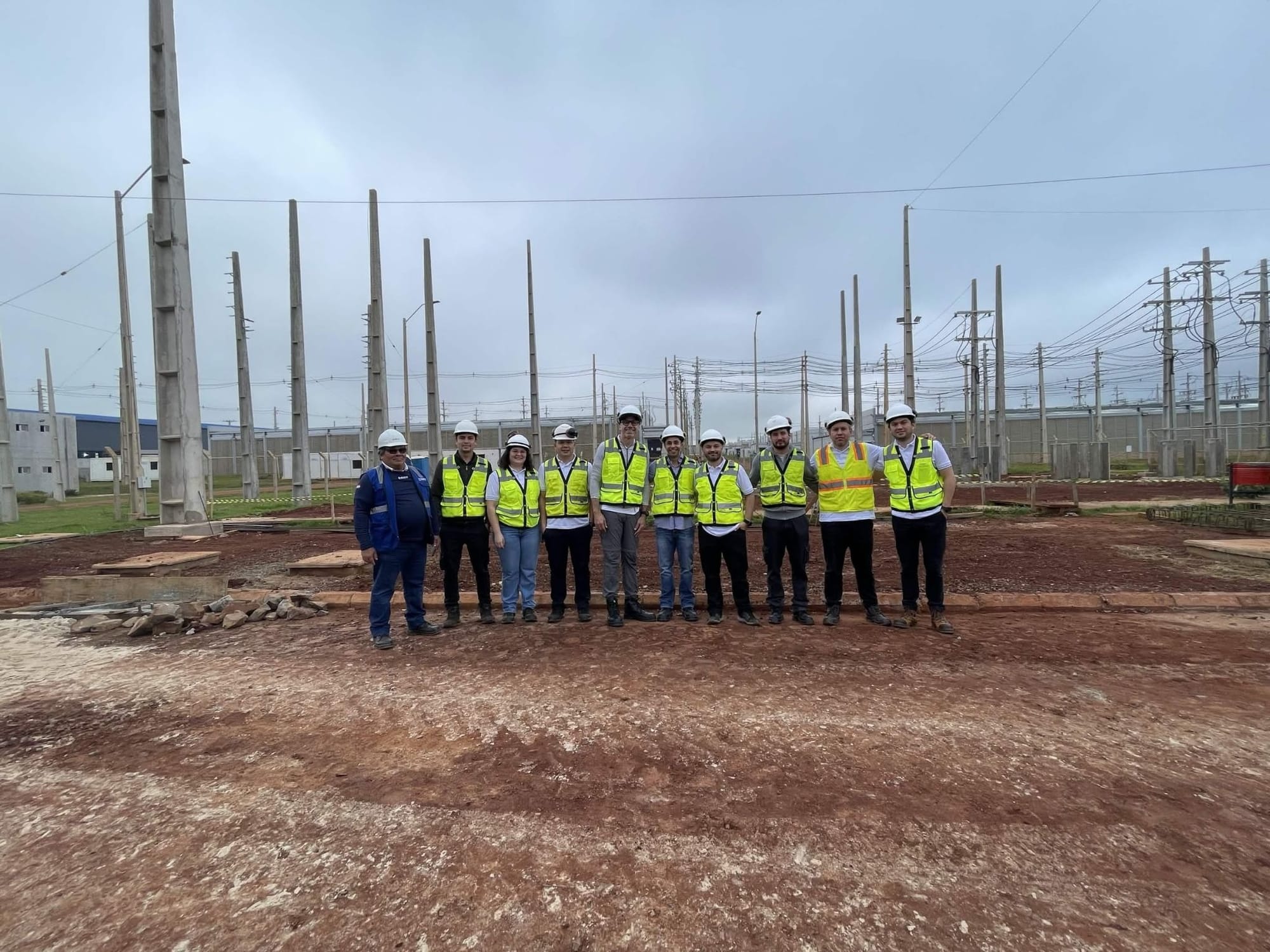
That puts Yguazú on a trajectory to grow well beyond its current 240 MW installed capacity over the coming quarters with the same dual-track logic in mind: Bitcoin mining today, optionality for HPC tomorrow.
Conclusion
A 240 MW Bitcoin mining campus doesn't run on Itaipú hydro alone. It runs on substations, SCADA, vertically integrated software, a 24/7 control room, local fabrication of cooling systems, and a working relationship with the national utility that's actively building toward automation. HIVE has all of that at Yguazú. It's why the published 12.15 EH/s figure tells less than the operation itself does.
Walking out at the end of the day, what struck us most wasn't the scale of operations, but rather the proprietary nature of it. In a market that's about to spend the next two years arguing about the December 2027 ANDE contract cliff, this kind of integration is an edge.
Paraguay proved the model: stranded hydro surplus, a clear regulatory framework, private capital building grid infrastructure, and Bitcoin mining as the first monetization layer before AI compute follows. Venezuela and its hydroelectric complex has many similarities to Paraguay’s, the same engineering talent, and a regulatory pathway that is actively opening. What operators like HIVE have built here is not just a blueprint for Paraguay. It is a blueprint that other nations will soon start implementing as the race for the electron, and time-to-compute accelerates.
— Happy Hashing!
About Luxor Technology Corporation
Luxor delivers hardware, software, and financial services that power the global compute and energy industry. Its product suite spans Bitcoin Mining Pools, ASIC Firmware, Hardware trading, Hashrate Derivatives, Energy services, a Miner Management software, Commander, and a bitcoin mining data platform, Hashrate Index.
About HIVE Digital Technologies
HIVE Digital Technologies (Nasdaq: HIVE | TSX: HIVE) is a global Bitcoin miner and AI/HPC infrastructure operator powered entirely by renewable energy. Founded in 2017, HIVE operates mining facilities in Canada, Sweden, and Paraguay, with its largest footprint anchored by two hydro-powered sites in Paraguay totaling 400 MW of installed capacity and 18.87 EH/s of operational hashrate. HIVE is actively expanding its AI compute infrastructure under the BUZZ AI Cloud platform, with GPU deployments live in Paraguay and across Canada. The company is listed on both the Nasdaq and the Toronto Stock Exchange.
Disclaimer
This content is for informational purposes only, you should not construe any such information or other material as legal, investment, financial, or other advice.


Hashrate Index Newsletter
Join the newsletter to receive the latest updates in your inbox.