Hammer Miner Series: Next-gen Efficient Home Miners
Two pack-a-punch Bitcoin lottery tickets and a DOGE digger for your desktop.

Home mining keeps producing blocks, stories, and new machine models. Through 2025 and into 2026, solo miners have found roughly 30 solo-mined blocks (call it 28–33), worth on the order of ~95–100 BTC in total rewards at 3.125 BTC plus transaction fees. With just a few terahash of desktop-class hardware. The winners are statistical noise, but they are exactly the noise that keeps the home mining category growing. The open-source Bitaxe project ignited a flame, Canaan’s Nano 3, Nano 3S, and Mini 3 built on the home heater appliance lane, and the Jingle Miner BTC Hashcard brought back GPU nostalgia.
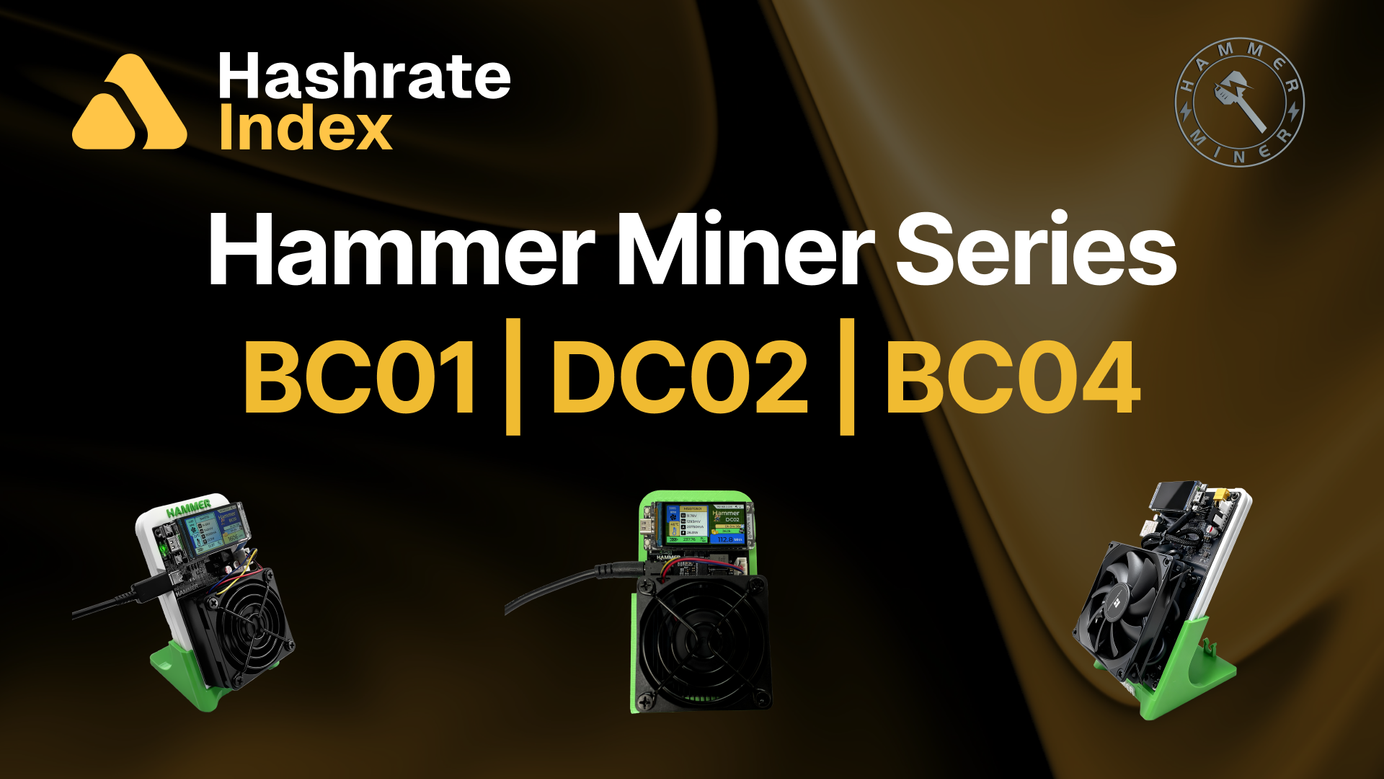
Now a lineup from Shenzhen wants a spot on the desk. Hammer Miner, a hardware brand under OnestopMining, designs highly efficient mining machines for home and personal use, coming in with a motto of making cryptocurrency mining “simpler, quieter and more accessible worldwide.” Its catalog splits into two hash algorithm families and three segments: SHA-256 Bitcoin miners built on Bitmain’s ASICs, and Scrypt miners built for DOGE & LTC. The flagship Thor Series is equipped with next-generation 3nm ASICs designed for the Antminer S23 series (BM1373), the BC Series runs the same 5nm silicon running under the Antminer S21 Pro’s hood (BM1370), and the DC Series of Scrypt miners is aimed at Dogecoin and Litecoin.
Let's dig in.
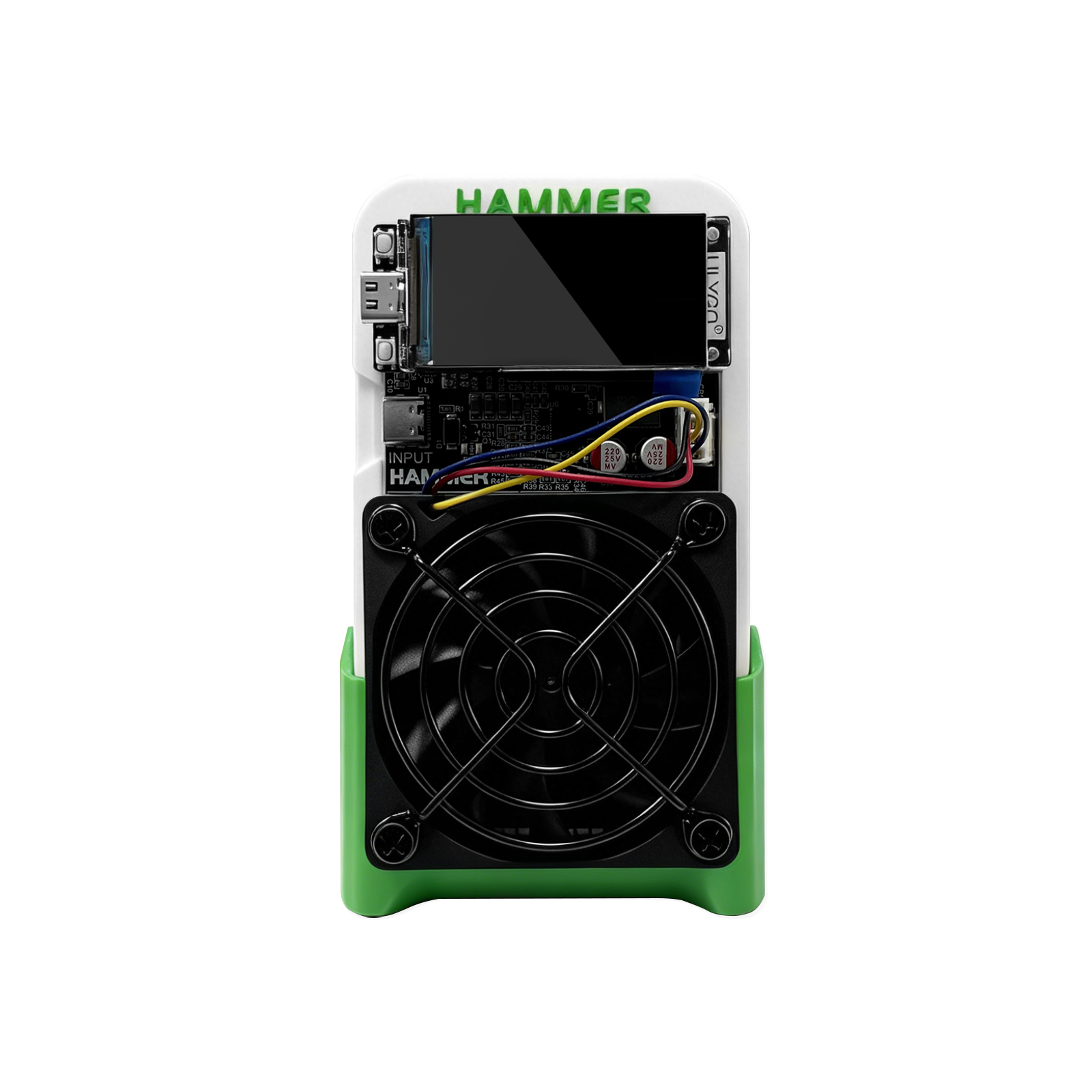
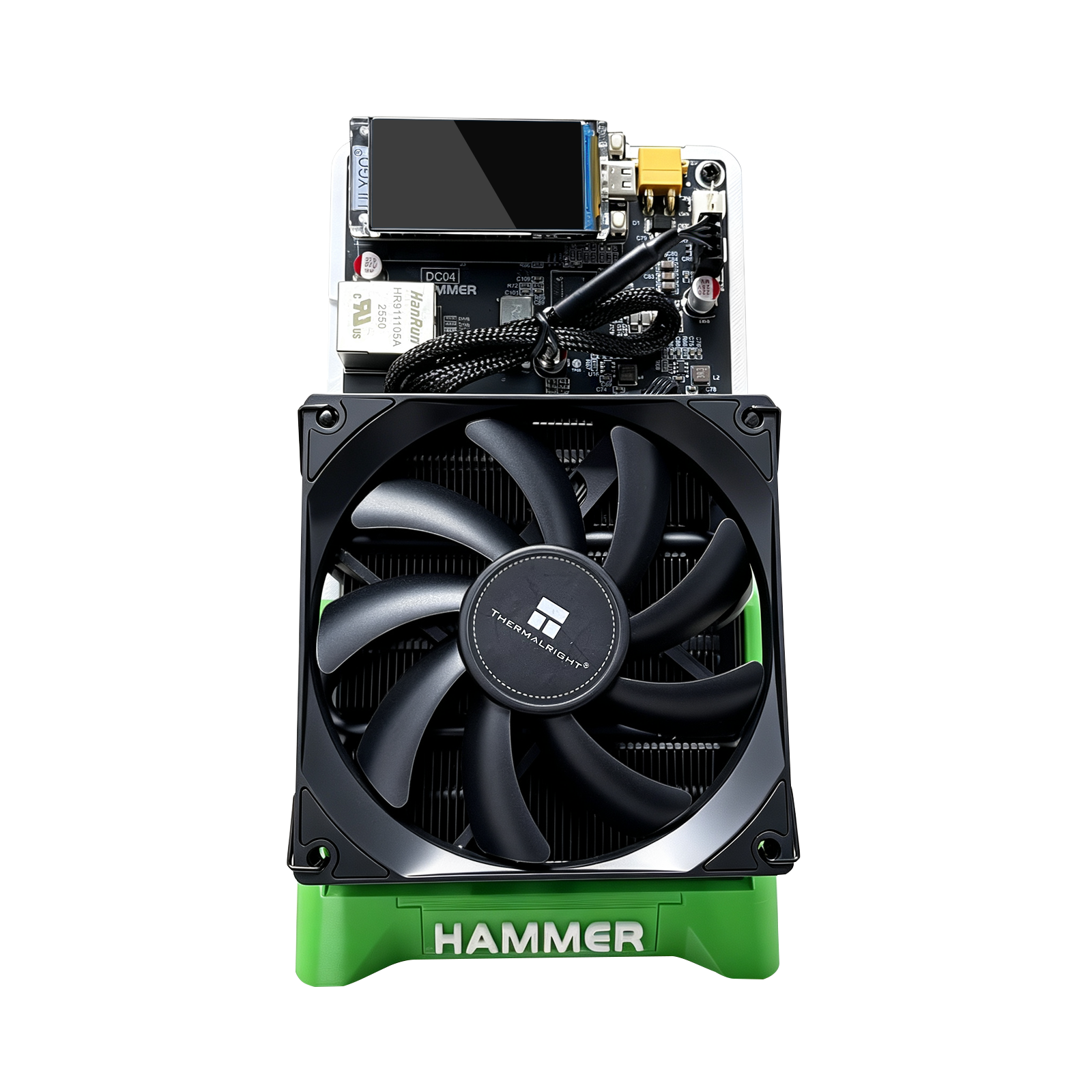
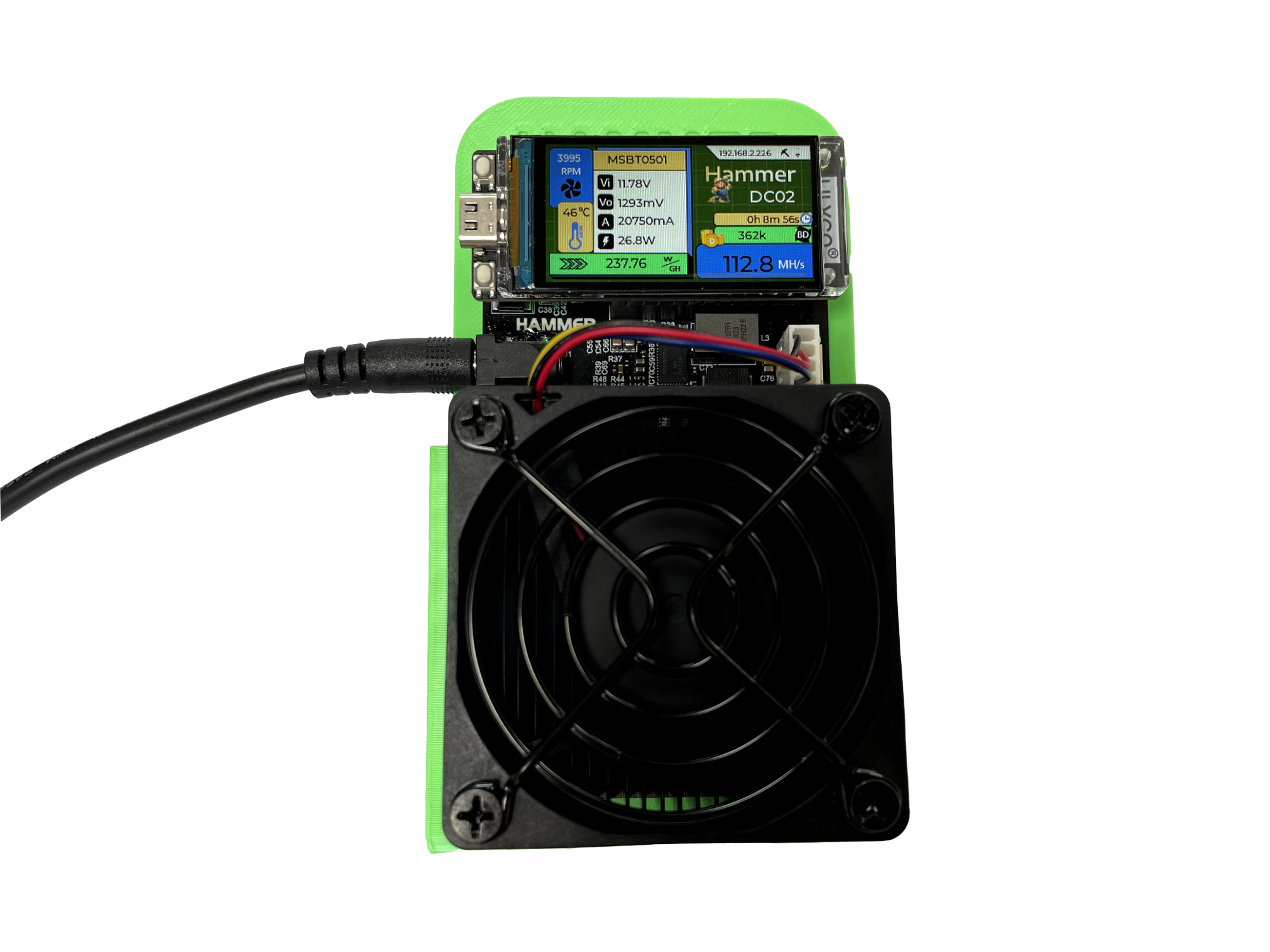
Specifications
BM1370 ASIC
The BC01 and BC04 models’ defining feature is the chip choice: Bitmain’s BM1370. It is a third-generation 5nm ASIC, originally designed for the Antminer S21 Pro.
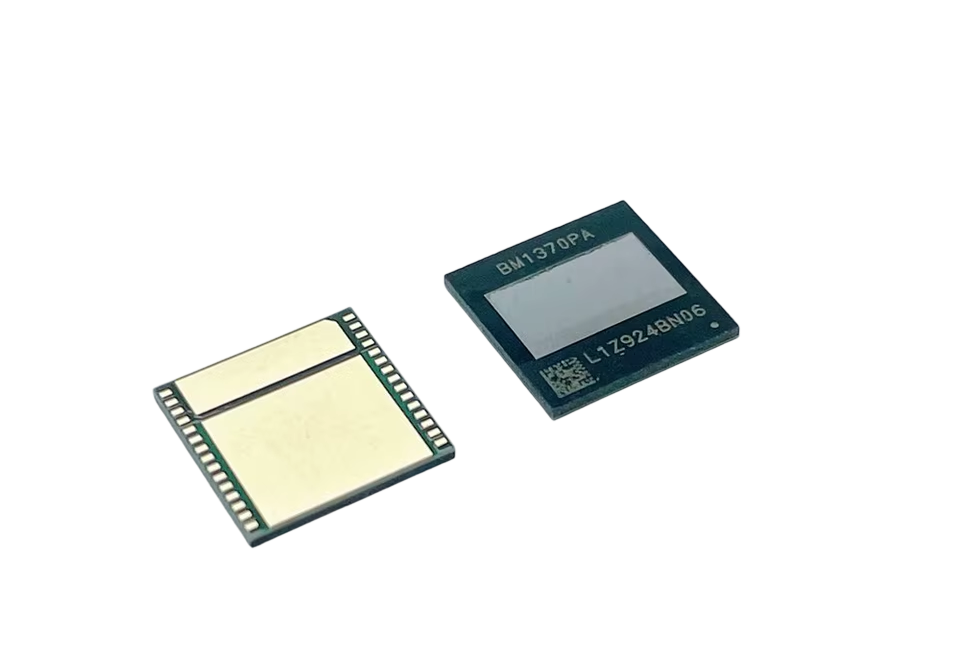
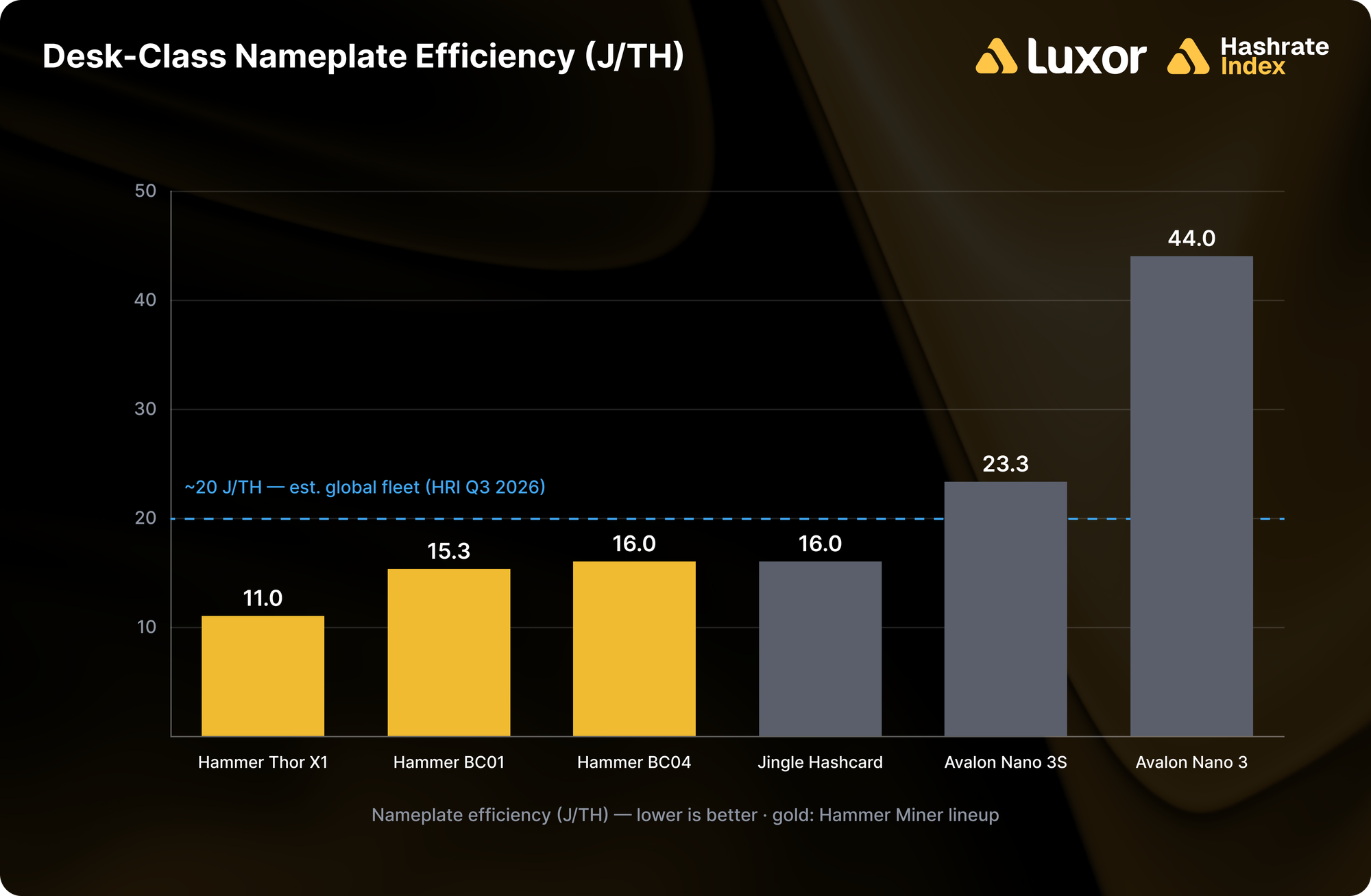
Fitting these chips into a desktop form-factor produces an efficiency profile that's genuinely competitive with industrial mining fleets. The BC01 and BC04 models deliver a nameplate efficiency of 15–16 J/TH, which is better than (below) the average network-wide industrial mining fleet efficiency. As of August 2026, Hashrate Index Premium’s latest Quarterly Mining Projections report (Q3 2026) projects the Bitcoin network’s global mining efficiency at ~20 J/TH. Find out more on bitcoin mining economics with a membership:
One BM1370 gives the BC01 its 1.5 TH/s at 23W (15.3 J/TH), and four of them give the BC04 6 TH/s at 96W (16.0 J/TH) — respectable for devices that weigh less than a laptop charger. Wall-power tests may suggest a range; the nameplate specifications are a tuned target.
The DC02 runs another algorithm: 120 MH/s of Scrypt at 30W (0.25 J/MH). Since Dogecoin (DOGE) has been merge-mined with Litecoin (LTC) since 2014, one DC02 works both chains simultaneously. One proof-of-work, two reward streams, no extra watts.
What’s In The Box
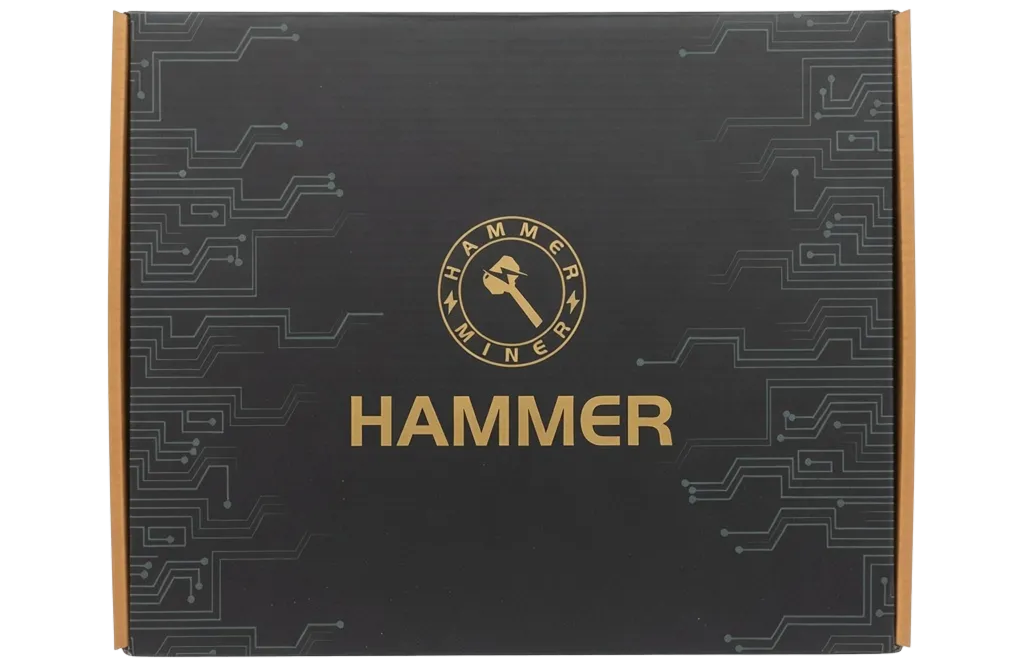
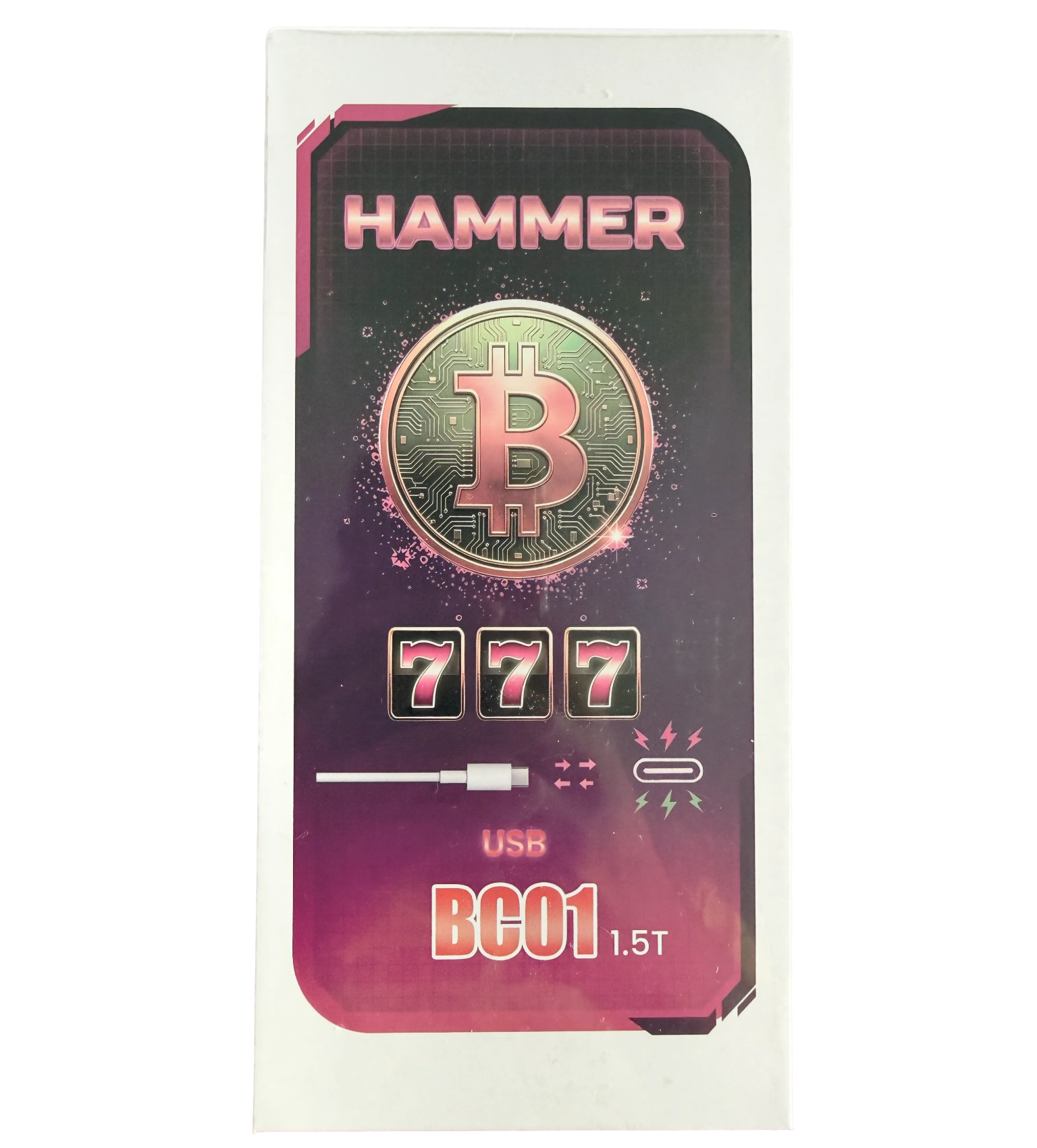
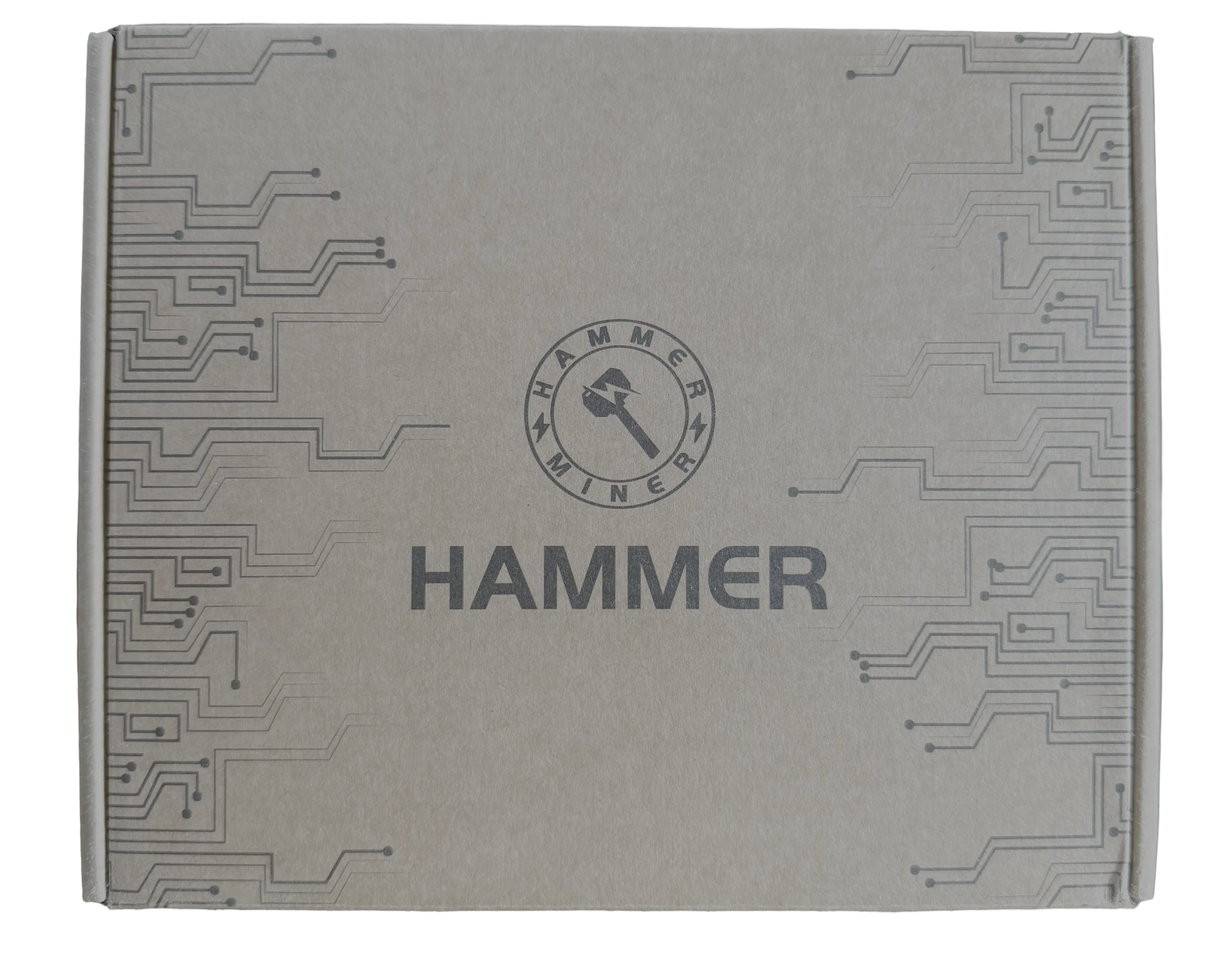
All three units are wall-outlet devices, no complex electrical equipment necessary.
- BC01: the miner plus a USB-C power adapter (5V/5A; US retail units ship with a 40W brick). It is genuinely pocket-size at 250 g.
- BC04: the miner, a 100–240V DC power brick terminating in an XT30 connector, and (from US retailers) a 3D printed stand. At 1.5 kg with onboard Ethernet, it feels like a solid gadget.
- DC02: the miner, PSU, and power cable. Hammer Miner lists USB-C 5V/6A input; some retail editions ship a 12V/5A brick instead (check your listing).
Each device has an onboard display (AMOLED on the BC01 and DC02, OLED on the BC04) showing live hashrate and temperature. A small but friendly feature that makes them far more fun to live with than headless boards.
Setup: Plug In, Pair Up, Point to Stratum
Setup follows the now-standard home-miner script of access-point onboarding through a browser, no app required:
- Power the unit and wait for the display to light. On first boot it broadcasts its own temporary Wi-Fi network.
- Join that network from a phone or laptop and browse to the device’s admin page.
- Enter your home 2.4 GHz Wi-Fi credentials (or, on the BC04, just plug in an Ethernet cable).
- Point it at a Stratum server destination. For pooled mining on Luxor Pool, that’s stratum+tcp://btc.global.luxor.tech:700 plus your device’s (worker) name. For solo mining, enter a solo pool Stratum endpoint and your payout bitcoin address.
- Save and let it reboot. The device hashes within minutes; the display confirms it.
Mining Economics: The Lottery Luck
Time for the honest math. Industrial miners buy power at $0.03–$0.05/kWh; residential rates run $0.09–$0.25/kWh with a global average around $0.175/kWh. At current hashprice ($40 per PH/s/day, with BTC near $77.5K) and today’s coin prices, here is what each unit produces:
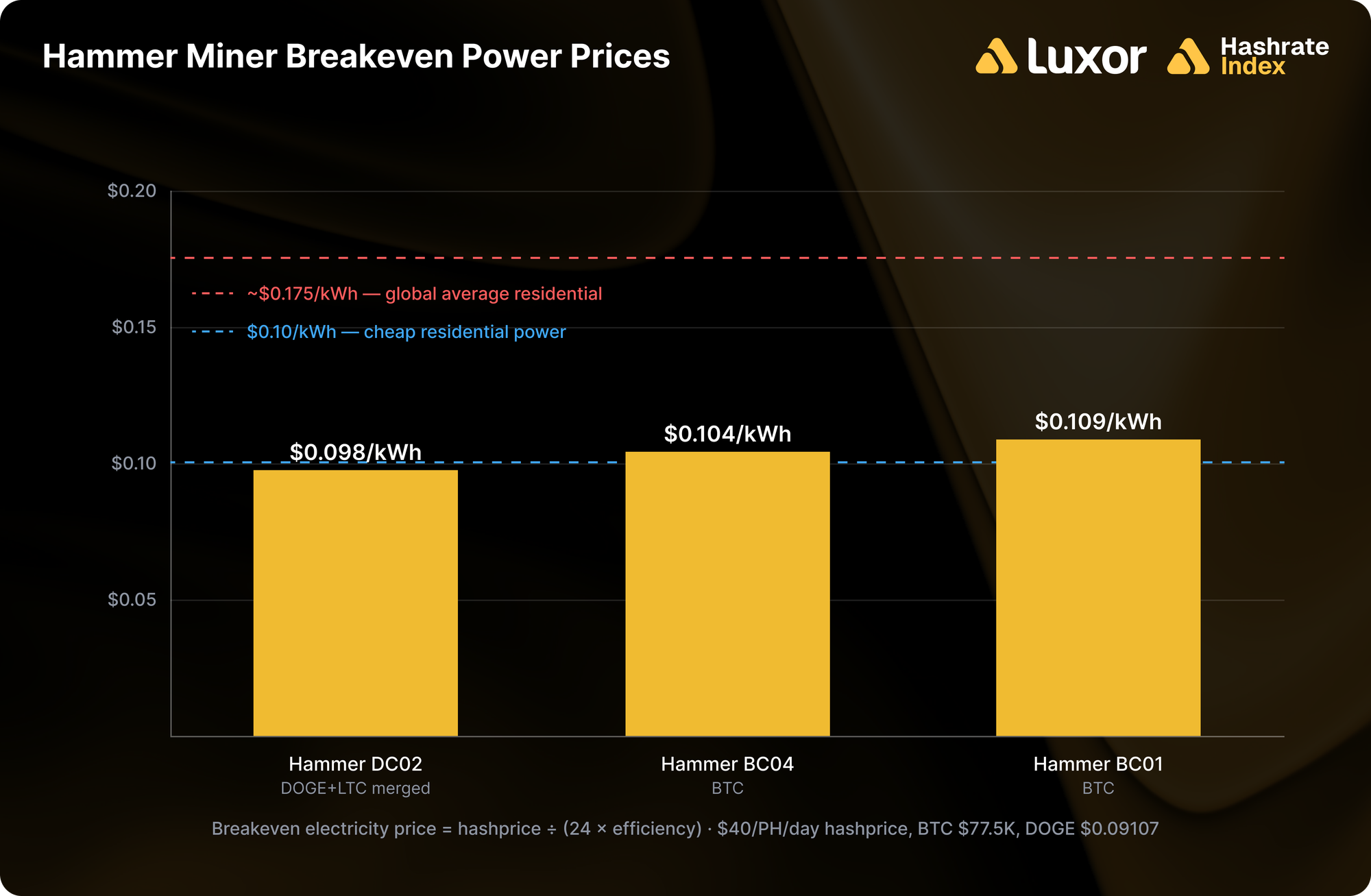
This is the rare moment when desk-class hardware is not automatically a money pit. At $40 hashprice, the BC01 breaks even at roughly $0.109/kWh and the BC04 at $0.104/kWh — both above the $0.10 that a well-situated US household actually pays. If your power is cheap, the BC-series runs at a small profit rather than a small loss. The DC02, at ~$0.098/kWh, sits just below that line and stays marginally underwater.
Keep the scale in perspective: the BC04’s edge at $0.10 power is about $0.01/day. These are not investments, and at the global average residential rate all three lose money. What changed is the direction of the rounding error, which matters mostly because it means a home miner on good power is no longer paying a premium for the privilege of participating.
Two Different Lotteries
Here the DC02 earns its place in this review. Solo mining is a Poisson-distributed lottery: your expected value equals pool revenue, but it arrives in jackpots. The size and frequency of those jackpots differ wildly between the two hash algorithms (SHA-256 vs Scrypt):
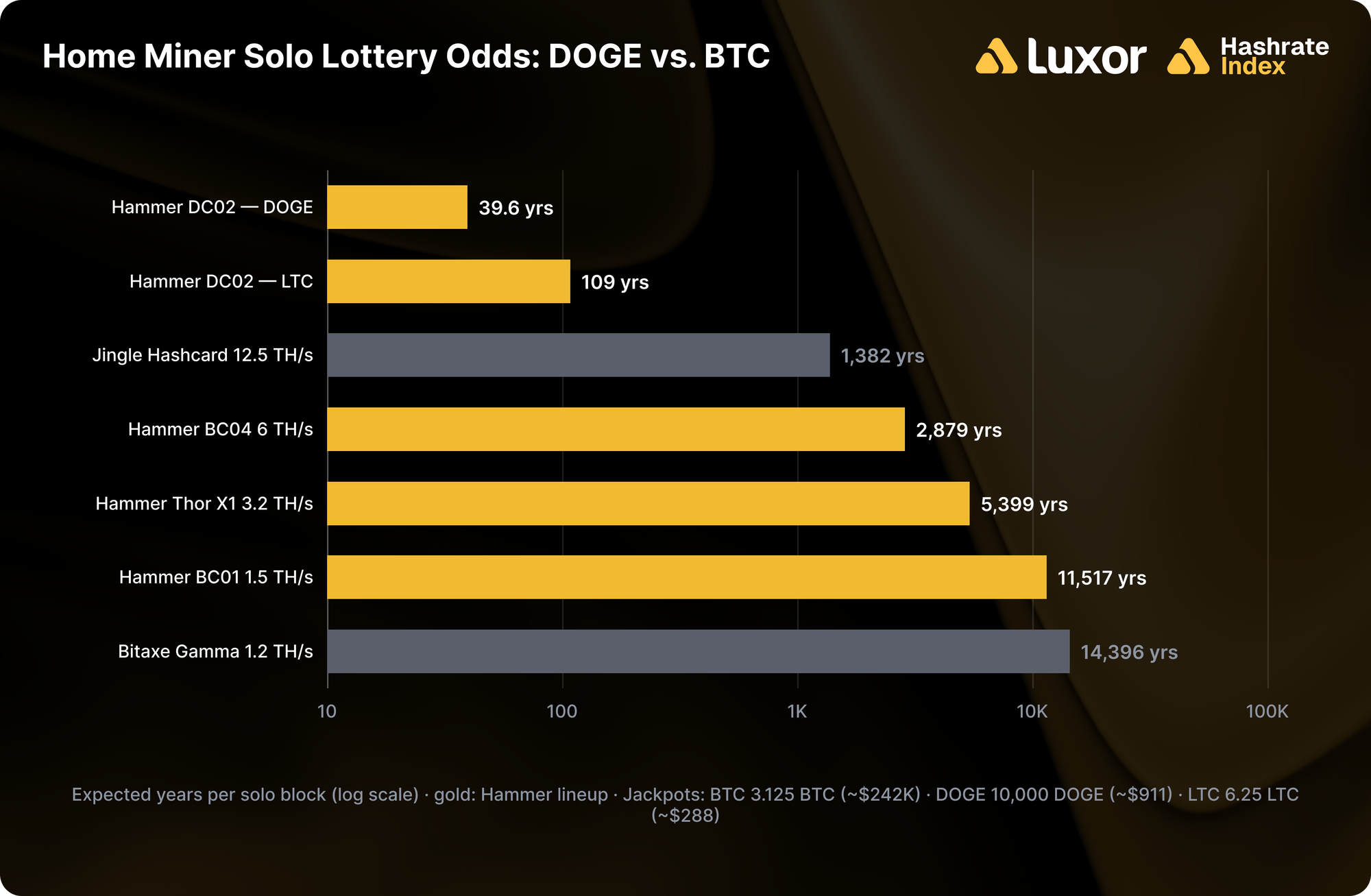
A BC04 finds a Bitcoin block once every ~2,900 years in expectation, a 3.125 BTC (~$203K) jackpot at 0.035% odds per year. The BC01 stretches that to ~11,500 years. The DC02, pointed at Dogecoin’s ~2.5 PH/s network, expects a 10,000 DOGE (~$700) block every ~40 years, about 2.5% odds in any given year, with a ~1% annual side-chance at a 6.25 LTC block. Same expected value per watt, but better lottery luck: the BC-series sells a Powerball ticket, the DC02 sells a scratch-off. For a hobbyist who wants to actually feel the lottery dynamic (maybe even win it once or twice in a mining career), the scratch-off may be a more attractive product.
None of this is a profitability play. Home miners run this hardware for participation, education, decentralization, and non-KYC sats paid straight from the blockchain. Our 2024 Bitcoin Home Mining Guide covers it in full.
Market Positioning
The BC-series lands in the most crowded shelf in home mining, and undercuts it on price per terahash:
At $249.99 for 6 TH/s, the BC04 is $41.67/TH — cheaper per terahash than the Jingle Hashcard ($44.80/TH) and well under the Avalon Nano 3S ($50.00/TH) at identical hashrate and 30% less power. The Nano 3S competes with intentional heat-recycling design and Canaan’s mobile application ecosystem; the BC04 counters with Ethernet, a lower price, and better efficiency (J/TH). Worth noting for tinkerers: Hammer Miner’s firmware is the manufacturer’s own — what ships is what you run. The Thor X1, Hammer’s 3nm single-chip unit at ~11 J/TH, deserves its own review as the current efficiency leader of the entire desktop class.
The DC02 barely has a shelf to sit on. Desktop-class Scrypt is nearly empty — a handful of 10–12 MH/s hobby units below it and Bitmain’s industrial 17 GH/s L9 far above it. At 120 MH/s and 30W, the DC02 owns the “real Scrypt hashrate on a bookshelf” niche more or less by default, and retail vendors market it accordingly as the first Dogecoin-specific lottery miner.
Who Are These Miners For?
- BC01: first-timers and educators — the cheapest (in absolute price), most quiet way to put S21 Pro-class silicon online and explore what bitcoin mining means.
- BC04: the value pick — best $/TH in the desk class, Ethernet, and Nano 3S hashrate at two-thirds the power.
- DC02: DOGE believers and lottery realists — the only ticket here with jackpot odds measured in decades rather than millennia.
Conclusion
Hammer Miner’s lineup brings a formidable entry to the desktop-class category. The BC04 delivers the best price-per-terahash on the shelf with genuinely competitive efficiency, the BC01 shrinks the same chip into a pocket-size starter kit, and the DC02 quietly offers the most playable lottery in home mining. None will pay your power bill, but all three will make you a participant instead of a spectator in the beautiful game.
— Happy Hashing!
About Luxor Technology Corporation
Luxor delivers hardware, software, and financial services that power the global compute and energy industry. Its product suite spans Bitcoin Mining Pools, ASIC Firmware, Hardware trading, Hashrate Derivatives, Energy services, a Miner Management software, Commander, and a bitcoin mining data platform, Hashrate Index.
Disclaimer
This content is for informational purposes only, you should not construe any such information or other material as legal, investment, financial, or other advice.

Hashrate Index Newsletter
Join the newsletter to receive the latest updates in your inbox.